Understanding Sandwich Panel Production Line Design
Sandwich panel represents a significant advancement in structural engineering and material science. Leveraging a layered architecture that combines strength, stiffness, and lightweight construction, composite sandwich panels have become a cornerstone of modern applications, from aerospace and automotive to architecture, industrial buildings, and cold storage facilities.
At its core, a composite sandwich panel consists of three primary elements:
Outer Skins (Facings): Thin, stiff outer layers that carry in-plane and bending loads.
Core Material: A thick, lightweight internal layer that separates the facings and resists shear forces.
Adhesive or Bonding Interface: A high-performance adhesive that ensures structural unity between core and facings.
Unlike traditional monolithic structures, composite sandwich panels derive their strength from the mechanical synergy between these layers. The outer skins provide bending stiffness, while the core contributes shear rigidity and thickness, dramatically increasing the panel’s moment of inertia without adding much weight.
Why Sandwich Panels are Widely Used?
1. Exceptional Strength-to-Weight Ratio
The key design objective of a composite sandwich panel is to achieve high stiffness and strength at minimal weight. By separating two strong facings with a lightweight core, the design increases structural rigidity more efficiently than a solid material of equivalent weight. This is a core reason why sandwich panels are a preferred choice in aerospace and high-performance applications.
2. Excellent Thermal and Acoustic Insulation
Sandwich panel core materials, such as polyurethane (PU), polyisocyanurate (PIR), or expanded polystyrene (EPS), provide thermal insulation properties that outperform many conventional building materials. This makes sandwich panels ideal for building envelopes, cold storage facilities, and temperature-controlled environments.
Acoustically, the panel structure helps absorb and dampen sound transmission, making composite sandwich panels suitable for industrial applications where noise control is required.
3. Improved Durability and Environmental Resistance
Composite sandwich panels resist corrosion, moisture, and degradation better than many traditional materials. Depending on the skin and core materials selected, panels can be designed to withstand harsh environmental conditions, ultraviolet exposure, and temperature fluctuations.
4. Customizability and Performance Tuning
One of the greatest advantages of composite sandwich panel design is its flexibility:
Core thickness and material can be adjusted to tune stiffness and insulation.
Facings can be selected for specific performance traits (e.g., fire resistance, aesthetics).
Panel shapes and profiles can be tailored to application needs.
This versatility has led to sandwich panels being used across industries including aerospace, marine, transportation, and construction.
Key Principles of Sandwich Panel Design
1. Core Selection
Balsa wood: Natural core material with good mechanical properties
Each core type has trade-offs between weight, cost, mechanical performance, and environmental resistance. For example, aluminum honeycomb offers excellent mechanical performance but at higher cost, while foam cores are cost-effective with good insulation properties.
2. Facing Material Selection
Facings provide the majority of the panel’s bending strength and surface durability. Common facing materials include:
Fiber Reinforced Polymers (FRP): Strong, lightweight, corrosion-resistant
Carbon Fiber: High strength and stiffness, premium performance
Aluminum or Steel: Common in building and industrial construction
The selection of facing materials influences not only mechanical performance but also cost, weight, and environmental resistance.
3. Adhesive and Bonding Considerations
The bonding interface between skins and core must withstand loads without delamination. Advanced adhesives such as epoxies are chosen for their high strength and compatibility with both facings and core materials. The quality of bonding directly influences panel performance under mechanical stress and environmental exposure.
4. Structural Geometry and Optimization
Sandwich panel design also involves geometric considerations:
Core thickness: Affects shear stiffness and overall structural rigidity.
Panel aspect ratio: Influences bending behavior.
Edge detailing: Critical for installation, weather sealing, and load transfer.
Designers often use finite-element analysis (FEA) and optimization software to simulate panel behavior under load and iterate design parameters before committing to full-scale production.
Sandwich Panels in Building Construction
In building construction, composite sandwich panels serve as key structural and envelope elements. Their application areas include:
1. Wall Panels
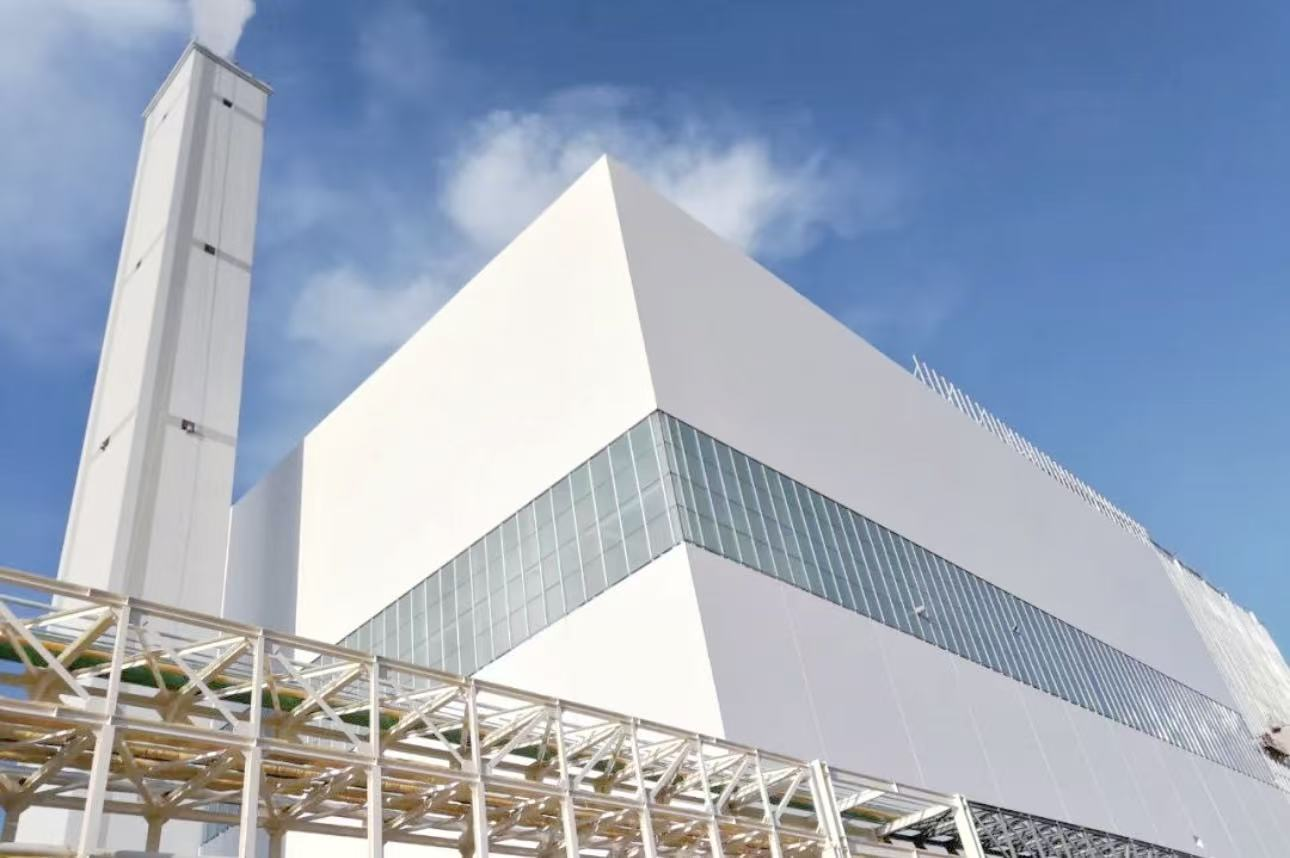
Sandwich panels manufactured via automated production lines provide building enclosures with excellent thermal insulation and structural performance. The high strength-to-weight ratio reduces structural support requirements, speeding up construction timelines.
2. Cold Storage and Controlled Environments
Cold storage facilities demand precise thermal control to preserve perishable goods. Composite sandwich panels with foam core materials (such as PU or PIR) are engineered to deliver consistent insulation performance over long service periods.
Automated production lines ensure uniform core density and panel thickness — key factors influencing insulation performance.
3. Prefabricated and Modular Construction
The rising trend of prefabricated buildings relies heavily on composite sandwich panel system. Factory-produced panels streamline site assembly, reduce construction waste, and improve quality control. Production lines allow manufacturers to fabricate large panel quantities with consistent geometric and material properties.
By setting exact manufacturing parameters, Jinggong’s sandwich panel production lines ensure consistent panel quality, enabling faster on-site assembly and higher overall project productivity.
Manufacturing Composite Sandwich Panels
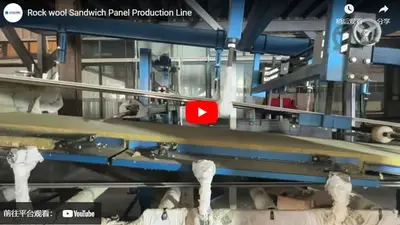
Composite sandwich panels are most efficiently produced on automated production lines that control every step of the manufacturing process.
Role of Automated Production Lines
A sandwich panel production line integrates the following stages:
Decoiling and feeding of metal facings
Panel profiling via roll forming
Core dispensing or placement (foam or honeycomb)
Bonding and curing under controlled pressure/heat
Cutting to length and stacking
Quality inspection and packaging
This integrated sequence minimizes variability and ensures that every panel meets design specifications.
Benefits of Automated Sandwich Panel Production Lines
Feature | Manual Process | Automated Production Line |
Production Speed | Low | High |
Quality Consistency | Variable | High |
Labor Dependency | High | Low |
Material Waste | Higher | Lower |
Scalability | Limited | Modular and Scalable |
Energy Efficiency | Low | Optimized |
Automated lines significantly reduce production time and increase output consistency. For manufacturers aiming to serve large-scale construction projects, these systems are indispensable.
Composite Sandwich Panel Design for Different Performance Targets
1. High Structural Stiffness
Applications such as building facades and modular walls require panels that resist bending and structural loads. Increasing core thickness and using high-performance facings such as FRP or aluminum enhances stiffness without significant weight increase.
2. Superior Thermal Insulation
Cold storage and energy-efficient building envelopes prioritize thermal performance. Foam cores like PU or PIR provide low thermal conductivity, especially when panels are manufactured with precise core distribution and tight tolerances.
3. Fire Safety
Fire safety standards in buildings often necessitate sandwich panels with fire-retardant cores like PIR or mineral wool. These panels resist flame spread and maintain structural integrity at elevated temperatures.
Sustainability and Lifecycle Performance
Sustainability is becoming a core requirement in modern design. Panels contribute to this goal in several ways:
Energy efficiency during building operation
Reduced construction waste
Lightweight structures reducing transportation emissions
Long service life with minimal maintenance
Designers and manufacturers increasingly consider end-of-life strategies, such as reuse or recycling, when selecting core and facing materials.
Sandwich panel design is a sophisticated blend of material science, structural engineering, and practical manufacturing. By combining lightweight cores with strong facings, these panels offer a powerful solution for strength, insulation, and rapid assembly.
Automated sandwich panel production lines are essential for translating design intent into consistent, high-quality products. Their ability to control production parameters, minimize waste, and increase output makes them invaluable in serving construction and industrial markets.
As demand for energy-efficient, durable, and flexible building materials grows, composite sandwich panels and the production systems that manufacture them will continue to play a central role in shaping the built environment.

 CN
CN
 EN
EN
 fr
fr  de
de  es
es  it
it  ru
ru  pt
pt  ar
ar  th
th  pl
pl  ro
ro 




 Call us on:
  Email Us:
  #1809, Jianhu Rd, Keqiao, Shaoxing, Zhejiang, China