Rockwool insulation, often referred to as mineral wool or stone wool, has become one of the most trusted materials in modern construction. Whether used in industrial buildings, commercial complexes, or high-performance sandwich panels, it is valued for its fire resistance, thermal insulation, and durability.
Yet behind its widespread use lies a simple but important question: what is rockwool insulation actually made of? Understanding its composition not only explains its performance advantages but also reveals why it requires specialized manufacturing processes.
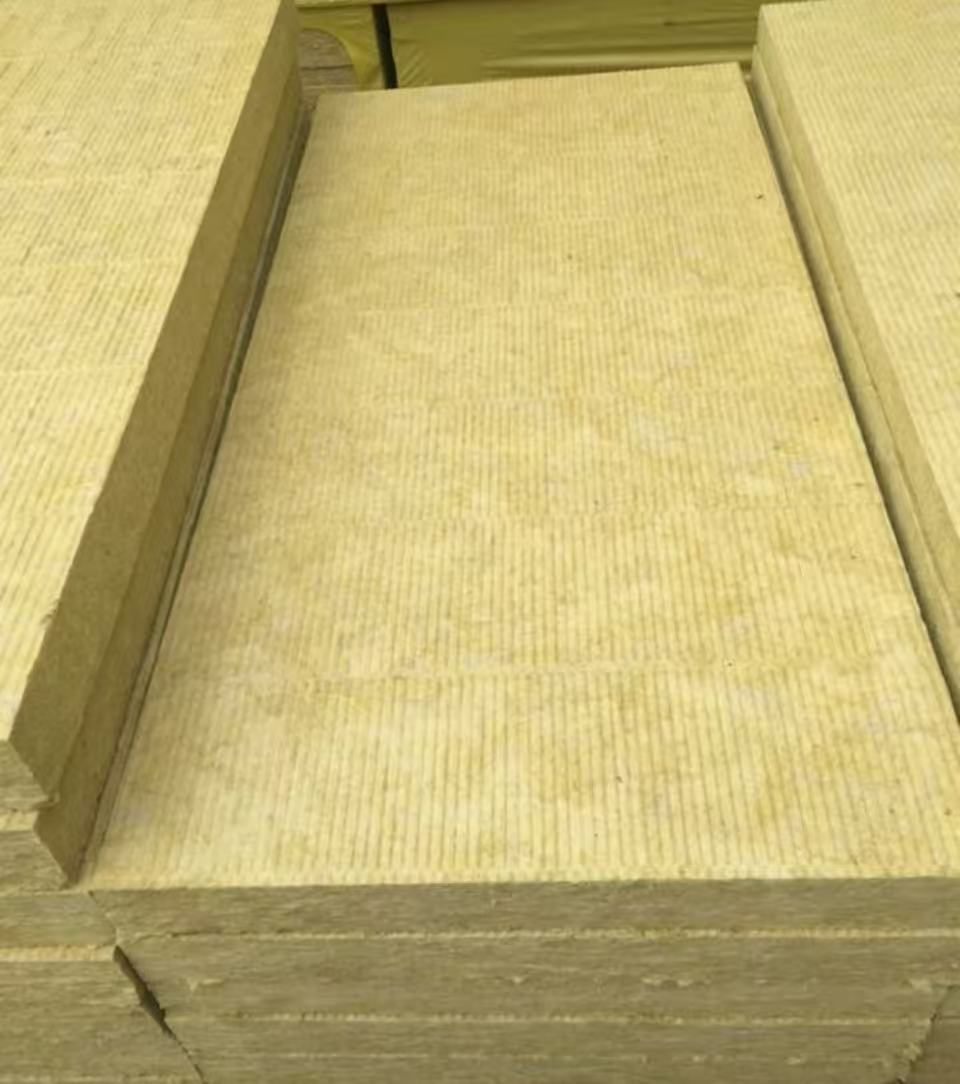
The Natural Origins of Rockwool Insulation
Rockwool insulation is fundamentally a mineral-based material, derived primarily from natural volcanic rock. The most common raw material used is basalt, a dense volcanic stone formed from rapidly cooled lava. This material is abundant, stable, and capable of withstanding extremely high temperatures, making it ideal for insulation applications.
In addition to basalt, manufacturers often incorporate steel slag, a recycled by-product from the steel industry. This not only enhances the mineral composition but also improves sustainability by reusing industrial waste. Small amounts of organic binders are added to hold the fibers together, along with trace oils to reduce dust during handling.
This combination of natural rock and recycled materials gives rockwool its unique identity: a product that is both environmentally responsible and industrially robust. Unlike polymer-based insulation materials, rockwool contains no flammable organic core, which is why it performs so well in fire-critical environments.
Material | Function | Approximate Percentage |
Basalt Rock | Main fiber structure | ~90% |
Steel Slag | Improves durability | 5–10% |
Binder | Fiber bonding | 2–4% |
Oil Additives | Dust suppression | <1% |
From Molten Rock to Insulation Fibers
To understand rockwool fully, it helps to visualize how these raw materials are transformed. The process begins by heating basalt and slag to temperatures exceeding 1,500°C, until they melt into a liquid similar to lava. This molten mixture is then spun at high speed, creating fine fibers that resemble wool. As these fibers are collected, they are bonded together using resins and shaped into mats, boards, or slabs. The resulting material has a porous, fibrous structure that traps air, which is the key to its insulation properties.
This transformation, from solid rock to soft fiber, explains why rockwool can simultaneously offer thermal insulation, sound absorption, and fire resistance. It is, in essence, engineered stone in fiber form.
Composition Determines Performance
The mineral composition of rockwool is directly responsible for its performance characteristics. Because it is made from inorganic materials, it is naturally non-combustible. Even at extremely high temperatures, it does not burn or release toxic gases, making it a preferred choice in buildings where fire safety is critical.
Its fibrous structure traps air pockets, significantly reducing heat transfer. This allows buildings insulated with rockwool to maintain stable indoor temperatures, improving energy efficiency and reducing heating and cooling costs.
Acoustically, the dense network of fibers absorbs sound waves, which is why rockwool is often used in environments where noise control is important. From industrial plants to commercial offices, it helps create quieter, more comfortable spaces.
Durability is another key advantage. Rockwool does not easily degrade, absorb moisture, or lose its shape over time. This stability ensures long-term performance with minimal maintenance.
The Transition from Insulation to Sandwich Panels
While rockwool is widely used as a standalone insulation material, one of its most important applications today is as the core of sandwich panels. This is where its role becomes even more significant in modern construction.
A rockwool sandwich panel combines two metal facings with a rockwool core. The metal layers provide structural strength and protection, while the rockwool delivers insulation and fire resistance. Together, they form a high-performance composite panel that is lightweight, durable, and easy to install.This combination has made rockwool sandwich panels a popular choice for factories, warehouses, power plants, and other industrial buildings. In these environments, both structural integrity and fire safety are essential, and rockwool panels offer an effective solution.
Unlike polyurethane foam, which expands and fills space during production, rockwool is a pre-formed fibrous material. This difference has a major impact on how sandwich panels are manufactured.
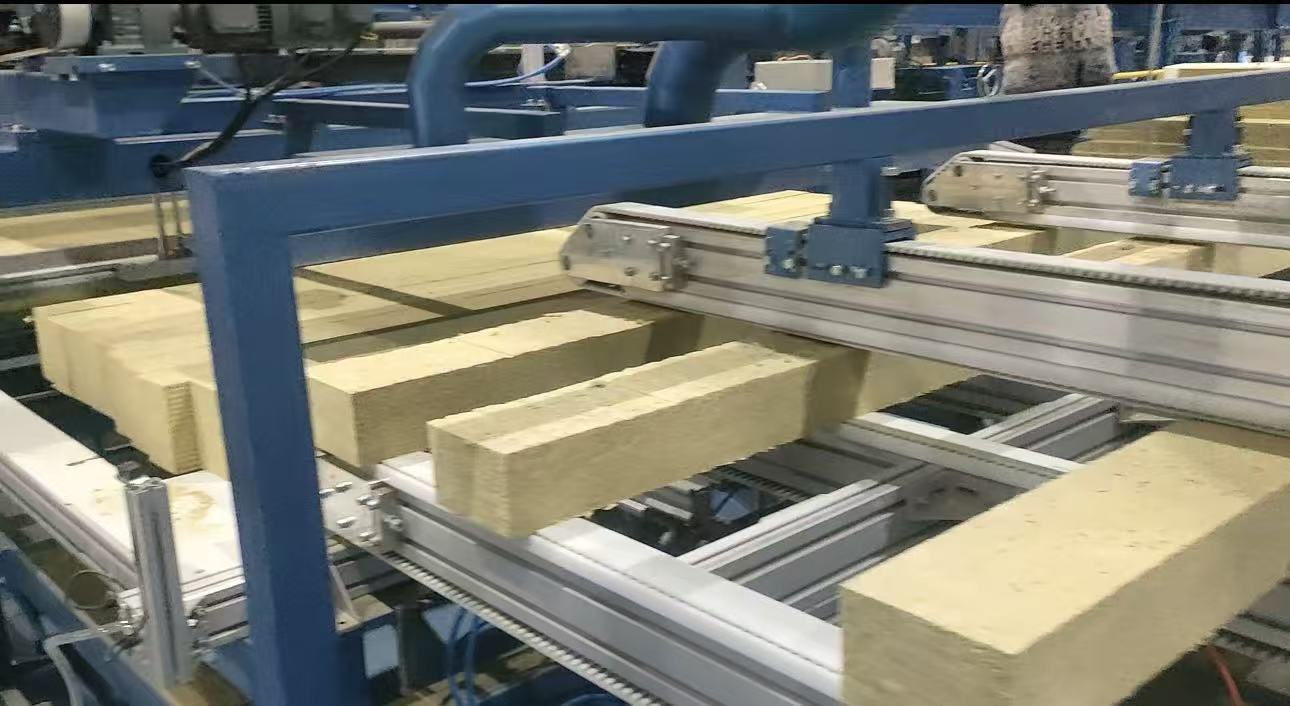
Rockwool must be carefully cut, arranged, and aligned before being integrated into the panel structure. Its density must be consistent, and its fibers must be oriented correctly to ensure optimal performance. At the same time, it must bond securely with the metal facings to create a stable composite structure.These requirements make the manufacturing process more complex. Achieving consistent quality across large volumes is not possible without advanced automation and precise control.
Jinggong’s Rockwool Panel Manufacturing
As demand for high-performance sandwich panels continues to grow, equipment manufacturers play a crucial role in enabling efficient production.
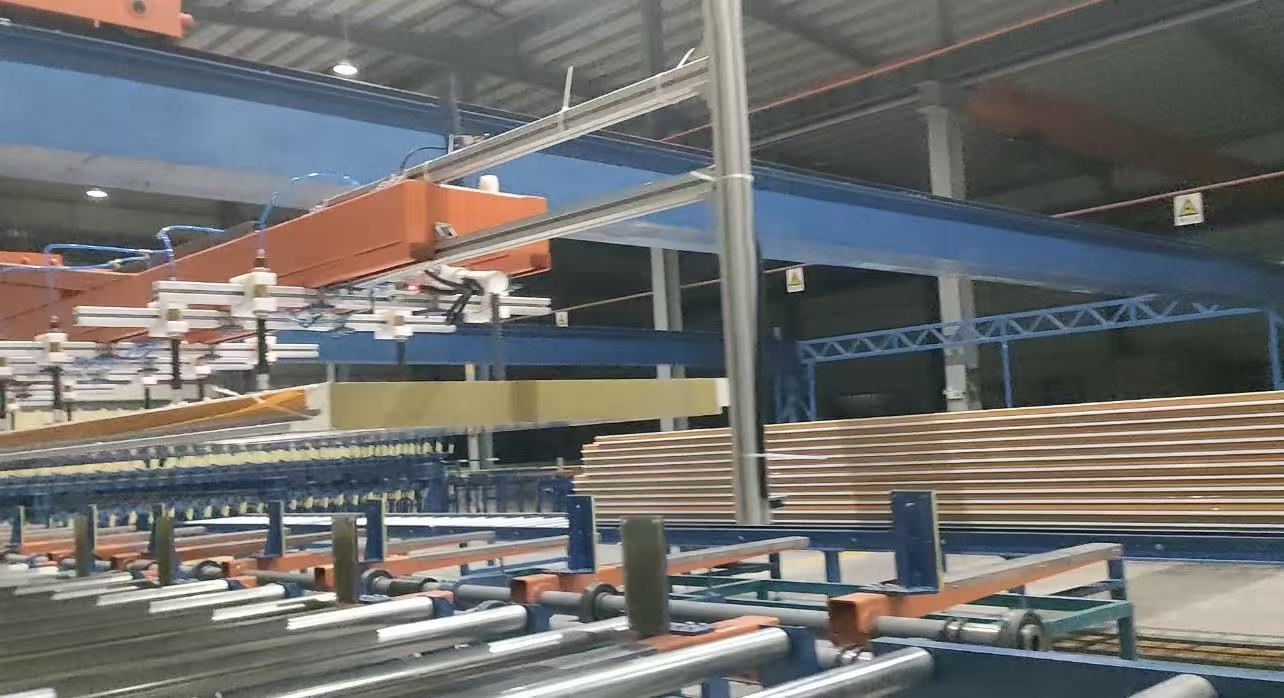
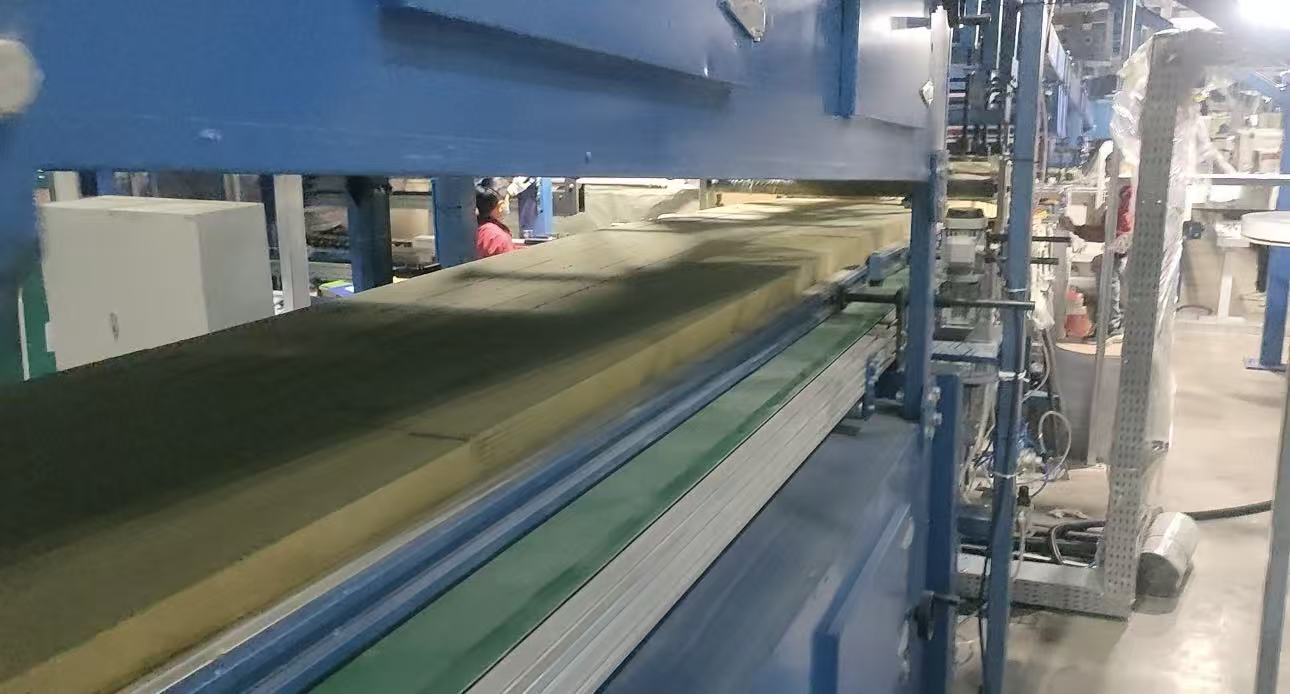
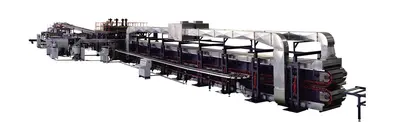
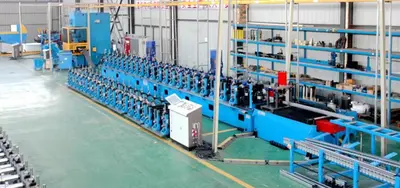
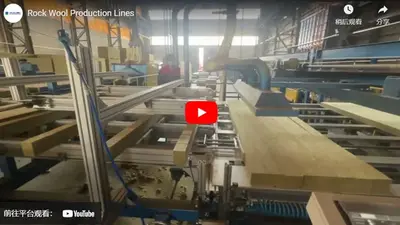
Jinggong rock wool production lines are engineered to address the specific challenges associated with rockwool materials. By combining advanced automation with precise mechanical design, these systems allow manufacturers to produce panels that meet stringent quality standards. The solutions include high-precision rockwool feeding systems, stable double belt pressing technology, and intelligent control systems that monitor key parameters throughout the production process. This ensures that every panel maintains consistent density, thickness, and bonding quality.
In addition, Jinggong’s flexible production configurations make it possible to produce panels of varying specifications, helping manufacturers adapt to different market requirements without sacrificing efficiency.
Material Innovation Meets Smart Manufacturing
The future of construction is increasingly defined by higher standards for safety, sustainability, and efficiency. Rockwool insulation, with its natural composition and high performance, is well positioned to meet these demands.
At the same time, manufacturing technology is evolving rapidly. Automated production lines are becoming more intelligent, incorporating digital monitoring and data-driven optimization to improve efficiency and reduce waste.
The combination of advanced materials like rockwool and modern production systems is transforming the way building materials are produced and used. Manufacturers who invest in these technologies will be better equipped to compete in a global market that demands both quality and scalability.
Rockwool insulation is made from natural basalt rock, recycled slag, and carefully selected binding materials. This mineral-based composition gives it exceptional fire resistance, thermal insulation, and durability. When used in sandwich panels,
rockwool becomes part of a high-performance building system that meets the demands of modern construction. However, its unique properties also require specialized manufacturing processes, making advanced sandwich panel production lines essential.
With solutions like those offered by Jinggong, manufacturers can efficiently transform raw materials into high-quality rockwool sandwich panels, ensuring consistent performance and meeting the evolving needs of the construction industry.

 CN
CN
 EN
EN
 fr
fr  de
de  es
es  it
it  ru
ru  pt
pt  ar
ar  th
th  pl
pl  ro
ro 

 Call us on:
  Email Us:
  #1809, Jianhu Rd, Keqiao, Shaoxing, Zhejiang, China