The Role of Sandwich Panel Line in Building Construction
In modern building construction, the focus on energy efficiency, speed of execution, structural performance, and sustainability has driven demand for advanced building materials and machinery. Among these, sandwich panels stand out as a key component in both industrial and commercial construction, drastically transforming how building envelopes are designed and assembled.
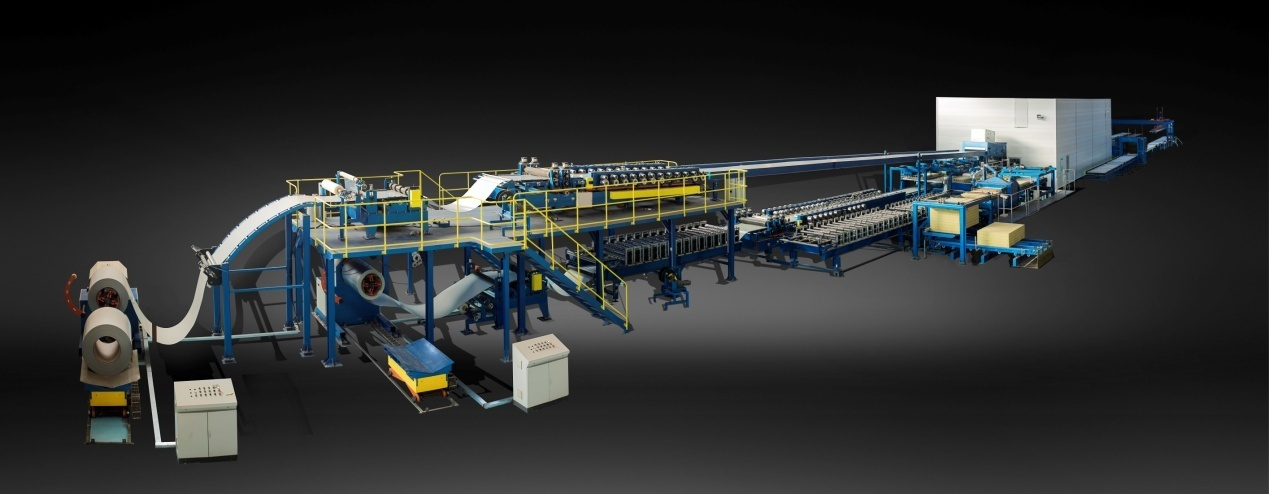
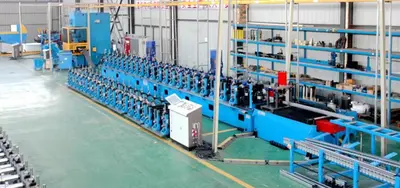
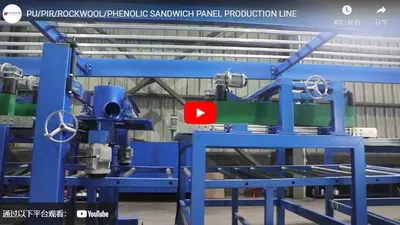
At the heart of sandwich panel fabrication is the sandwich panel production line, a highly automated manufacturing system that produces insulated panels with consistent quality at industrial scale.
Understanding Sandwich Panels and Their Construction Role
Sandwich panels are composite building elements made of two outer metal facings bonded to a lightweight insulating core. The combination results in panels that offer high structural strength, thermal insulation, fire resistance, and quick installation.
Common core materials include:
The ability to combine these materials into a single, engineered product is only possible through sandwich panel production lines, which integrate multiple processes, from coil feeding and roll forming to foaming, lamination, cutting, and stacking, into one cohesive workflow.
Industry analyses highlight that sandwich panels provide significant advantages in energy savings, reduced construction time, and lifecycle performance, making them essential for modern building envelopes. A sound production line is indispensable for ensuring these panels perform as intended.
Enabling Fast and Efficient Construction
One of the most visible roles sandwich panel lines play in building construction is speed. Traditional construction methods involving bricked walls, poured concrete, and on-site insulation installation are time-consuming. By contrast, sandwich panels manufactured on high-speed production lines can be produced in large quantities with minimal variation.
A sandwich panel production line combined with an efficient logistics process allows:
This efficiency is especially beneficial for large industrial buildings, warehouses, logistics centers, modular housing projects, and cold storage facilities where construction speed directly translates to cost savings and early operational readiness.
Jinggong’s sandwich panel production lines are designed to support continuous, high-output manufacturing, capable of producing panels quickly without sacrificing quality, making them suitable for high-demand construction timelines.
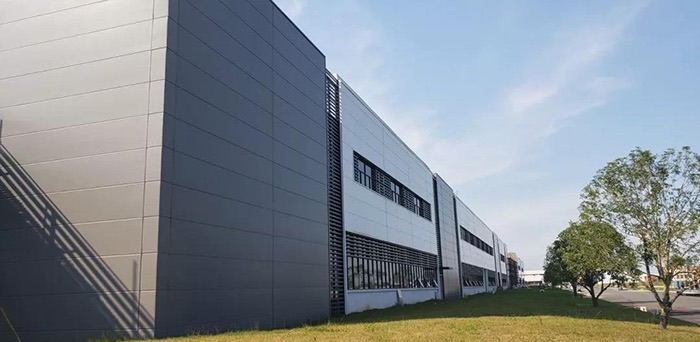
Ensuring Consistent Quality of Building Envelopes
Consistency in material performance is crucial in building construction, particularly for elements like walls and roofs that endure long-term exposure to weather, thermal loads, and mechanical stresses. Sandwich panel lines play a vital role in delivering uniform product quality, involving precise control of core density, panel thickness, bonding strength and surface flatness.
A well-configured production line minimizes human error and process variability. For example, automated foaming systems ensure consistent core material distribution in PU or PIR panels, while properly calibrated curing systems guarantee uniform bond strength throughout the panel length.
Manufacturers using modern lines can produce panels that meet strict quality standards, regulatory codes, and performance specifications, essential for reliable building envelope systems.
Quality consistency also facilitates reliable design integration, as architects and engineers can specify panel properties with confidence, an important feature in projects emphasizing performance parameters like insulation values or fire resistance.
Enhancing Energy Efficiency and Building Performance
Energy efficiency is a global priority in building design due to its influence on operational costs and sustainability. Well-manufactured sandwich panels significantly impact thermal performance and energy use.
How Sandwich Panel Lines Contribute to Energy Efficiency?
Precise Control Over Insulation Core
Production lines ensure that insulation cores like PU, PIR, and EPS are distributed evenly and achieve the desired density for optimal thermal resistance.
Reduced Thermal Bridging
Sandwich panels produced to exact tolerances reduce gaps and joints that can lead to heat loss, improving the building’s overall thermal envelope.
Repeatable Performance
High-quality manufacturing ensures that panels across the entire project deliver similar thermal properties, reducing weak spots in insulation coverage.
Buildings constructed with panels from reliable production lines generally demonstrate lower heating and cooling energy demands, contributing to reduced operational carbon emissions and improved occupant comfort.
Supporting Versatility in Construction Applications
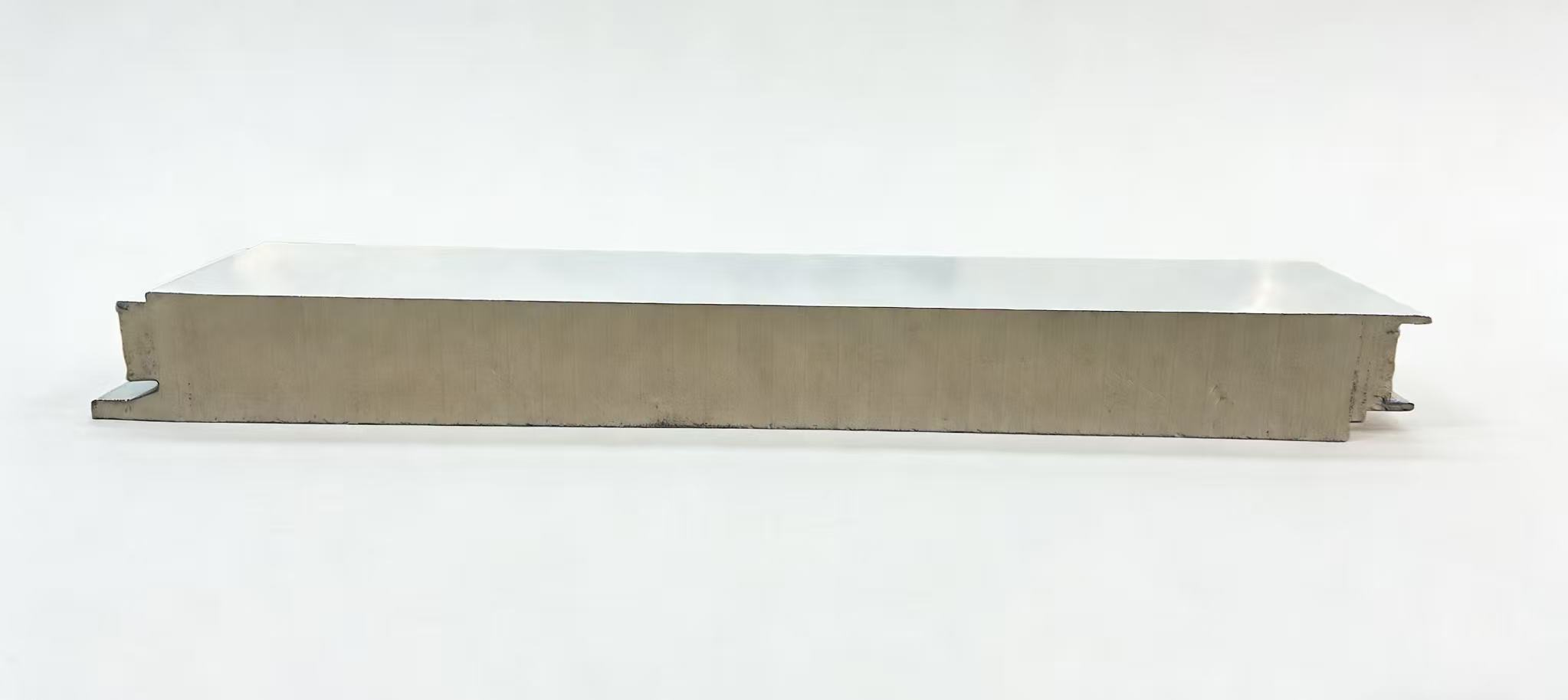
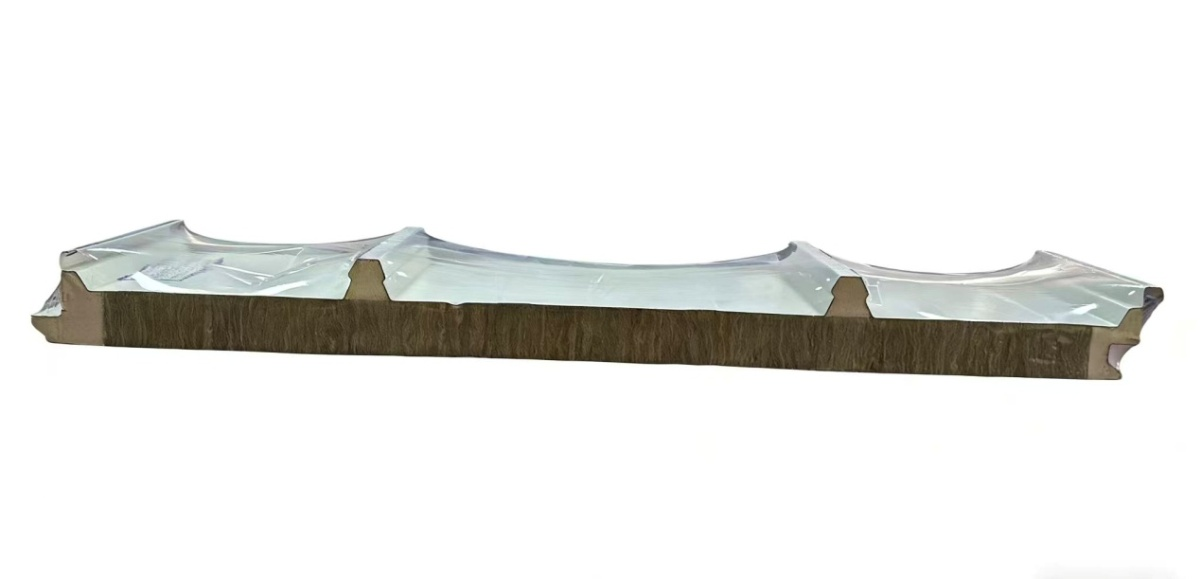
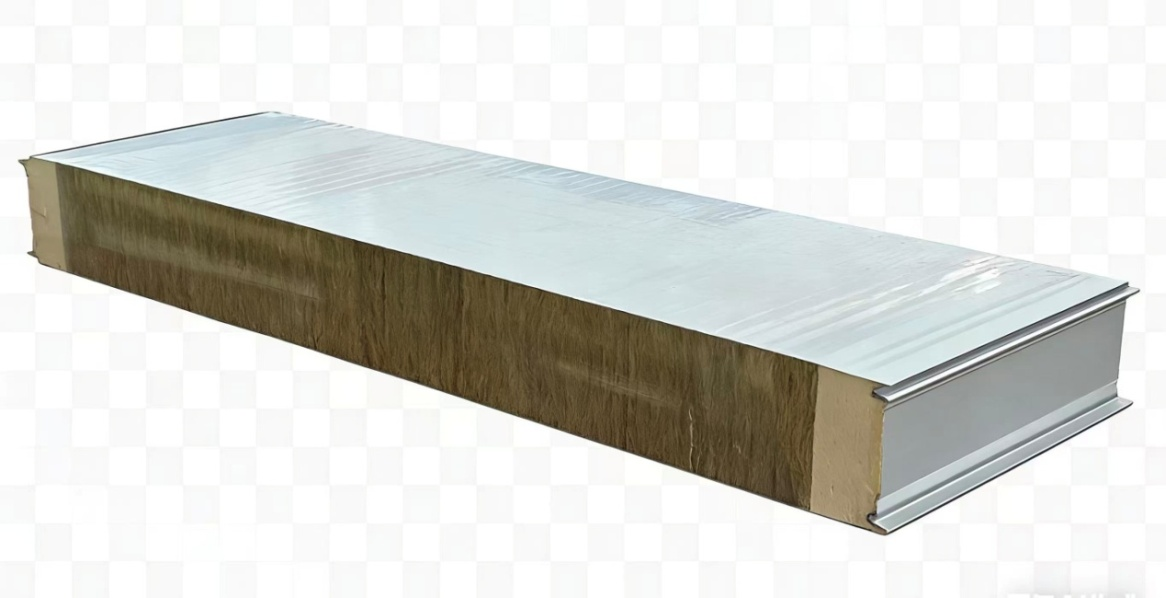
Sandwich panel production lines are engineered with configurability and flexibility, allowing manufacturers to produce panels for a wide spectrum of building applications.
Application | Typical Panel Type | Key Benefit |
Industrial buildings | PU / PIR wall & roof panels | Speed + insulation |
Cold storage | High thickness PU panel | Thermal performance |
Commercial facades | Architectural profiles | Aesthetic flexibility |
Cleanrooms | Purification panels | Smooth surface & hygiene |
Residential modules | EPS panels | Cost efficiency |
Fire-rated construction | Rockwool panels | Fire resistance |
With the right production line, manufacturers can expand their product portfolios, addressing diverse market needs from thermal efficiency to fire safety and architectural design.
The sandwich panel lines support multi-material configurations, enabling manufacturers to produce different panel types on a single production platform, a significant advantage in flexible manufacturing strategies.
Improving Structural Performance and Durability
Sandwich panel lines enable the production of panels with engineered structural behavior. For structural performance, elements like bond quality, facing material strength, and core integrity are essential.
Well-produced panels contribute to:
Load-bearing capacity in building envelopes
Resistance to wind uplift and lateral loads
Surface durability against impact and environmental stress
Consistent manufacturing processes ensure that panel layers are properly bonded and mechanically stable, contributing to building durability and safety — core requirements in industrial, commercial, and high-rise construction.
Reducing Lifecycle Costs and Environmental Impact
While initial construction cost is important, building owners and developers increasingly consider lifecycle costs, including energy use, maintenance, and durability.
Sandwich panels manufactured on modern production lines deliver long-term value through thermal efficiency, low maintenance, reduced material waste and high durability. Moreover, efficient production lines reduce material wastage and energy consumption during manufacturing. Many advanced lines incorporate energy-saving features and optimized process workflows to minimize environmental footprint.
Jinggong’s sandwich panel production solutions are designed with energy-efficient systems and precise material utilization, aligning manufacturing practices with sustainable construction goals.
Meeting Regulatory Standards and Certification Requirements
Buildings must comply with building codes, safety standards, and performance certifications. Sandwich panel lines play a crucial role in ensuring that panel products meet such requirements through controlled manufacturing processes.
Regulatory compliance aspects include fire resistance classifications, thermal performance ratings, structural integrity standards and material safety regulations.
Production lines with precise control systems enable panel manufacturers to produce products that can be tested and certified consistently, ensuring regulatory compliance and customer confidence.
Supporting Prefabrication and Modular Construction
Prefabricated and modular construction is gaining traction for its speed, quality control, and reduced on-site disruptions. Sandwich panels are integral to prefabricated wall and roof systems, and production lines provide the manufacturing backbone for such modular approaches. Manufacturers using automated sandwich panel lines can meet the stringent demands of modular construction with reliable outputs and tight tolerances.
Prefabrication benefits supported by sandwich panel production include:
Off-site panel production
Minimized on-site assembly time
Higher quality assurance
Predictable project scheduling
The sandwich panel production line is a pivotal element in modern building construction. It supports:
Fast and efficient construction
Consistent product quality
Energy efficiency and performance
Versatile product applications
Structural durability
Lower lifecycle costs
Regulatory compliance
Prefabrication and modular building trends
These roles bridge the gap between engineered building material design and practical implementation on construction sites.
Whether producing high-performance PU panels for industrial buildings, EPS panels for prefabricated housing, or rockwool panels for fire-safe construction, a reliable production line is essential. Solutions like Jinggong’s sandwich panel production lines provide the technology, flexibility, and reliability needed to meet these growing construction demands, supporting manufacturers in delivering high-quality panels that define modern building envelopes.

 CN
CN
 EN
EN
 fr
fr  de
de  es
es  it
it  ru
ru  pt
pt  ar
ar  th
th  pl
pl  ro
ro 

 Call us on:
  Email Us:
  #1809, Jianhu Rd, Keqiao, Shaoxing, Zhejiang, China