Where Sandwich Panel Production Lines are Applied?
Sandwich panel production lines represent a cornerstone of modern manufacturing for the construction and industrial sectors. These advanced systems produce composite panels consisting of two outer metal facings, typically steel or aluminum, bonded to an insulating core material such as polyurethane (PU), polyisocyanurate (PIR), expanded polystyrene (EPS), or mineral wool. The resulting panels deliver exceptional thermal insulation, structural strength, fire resistance, and rapid installation capabilities. Continuous and discontinuous production lines are deployed worldwide to meet surging demand for energy-efficient, cost-effective, and sustainable building solutions.
The application of sandwich panel production lines spans multiple industries, driven by the need for high-volume, consistent-quality output. From cold storage facilities requiring precise temperature control to commercial warehouses demanding quick assembly, these lines enable manufacturers to scale production efficiently while adapting to diverse specifications. Continuous lines excel in high-output scenarios, while discontinuous lines offer flexibility for custom or smaller-batch production.
Cold Storage and Refrigeration Industry
One of the most prominent applications for sandwich panel production line is in the cold storage and refrigeration sector. PU and PIR core panels, known for their low thermal conductivity, are ideal for walk-in coolers, large refrigerated warehouses, food processing plants, and pharmaceutical storage facilities. Production lines dedicated to these cores use high-pressure foaming systems and double-belt presses to ensure uniform density and airtight bonding.
In this industry, manufacturers operate production lines to produce panels with thicknesses ranging from 100 mm to 250 mm or more, incorporating vapor barriers and food-safe coatings. The continuous production method is particularly favored here because it supports the high volumes needed for logistics hubs and temperature-controlled supply chains. As global food trade expands and cold chain infrastructure grows in emerging markets across Asia, Africa, and Latin America, sandwich panel production lines have become essential investments for local manufacturers seeking to reduce reliance on imports.
Commercial and Industrial Construction
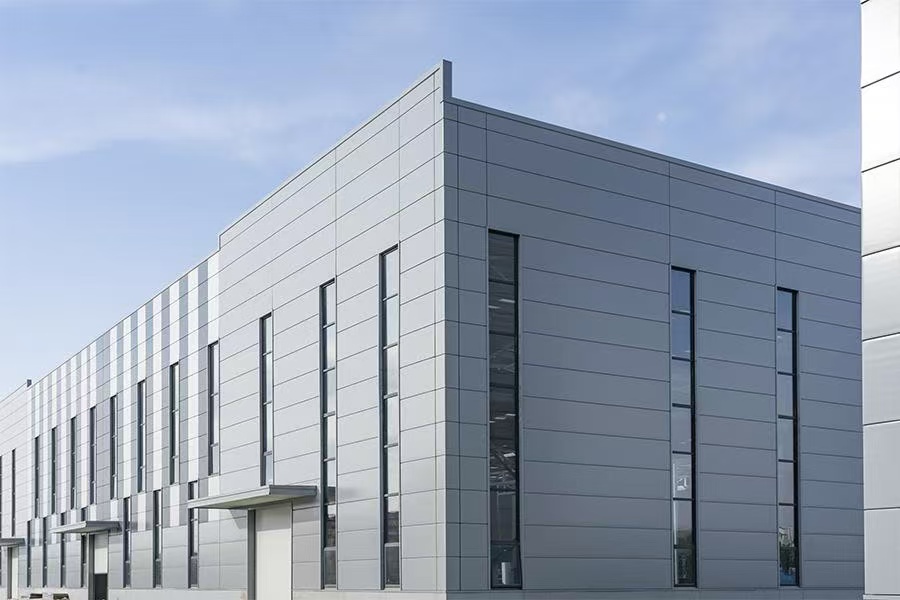
Sandwich panel production lines find extensive application in the broader construction industry, serving warehouses, factories, retail centers, and office buildings. EPS and PU/PIR lines are commonly deployed to produce cost-effective panels for walls and roofs, offering fast erection times that slash construction schedules from months to weeks. A building using sandwich panels can be assembled in roughly one month compared to 6–7 months for traditional masonry methods.
Industrial parks and manufacturing facilities benefit from the durability, weather resistance, and low maintenance of these panels. Production lines equipped with roll forming for various profiles allow customization to meet architectural and load-bearing requirements. In Europe and North America, lines producing mineral wool core panels are widely applied where fire safety regulations are stringent, delivering A1 or A2 fire classifications for high-risk industrial environments.
Emerging economies in Southeast Asia and the Middle East have seen rapid deployment of these production lines to support infrastructure booms. Local factories use them to supply panels for logistics centers, exhibition halls, and sports facilities, reducing project costs while meeting growing demands for energy-efficient buildings.
Clean Rooms and Controlled Environments
High-precision sectors such as pharmaceuticals, semiconductors, biotechnology, and healthcare rely heavily on sandwich panel production lines for clean room applications. Specialized continuous or discontinuous lines produce panels with non-particulating surfaces, chemical resistance, and easy-to-clean finishes. These lines incorporate advanced quality control systems, including sensors for thickness uniformity and bond strength.
In clean room manufacturing, panels must maintain strict hygienic standards and airtight seals. Production lines designed for this niche often include features for antimicrobial coatings and electrostatic control. As the global pharmaceutical industry expands, dedicated production facilities equipped with these lines have proliferated to serve regional needs without long lead times.
Agricultural and Modular Construction
Agricultural buildings, including barns, storage sheds, and livestock facilities, represent another key area where sandwich panel production lines are applied. EPS and PU lines provide affordable, insulated solutions that protect against temperature fluctuations and moisture. Their lightweight nature simplifies transport to remote sites.
The booming modular and prefabricated construction sector further drives demand. Production lines support the manufacture of panels for relocatable buildings, disaster relief shelters, military camps, and site offices. Discontinuous lines are especially useful here, offering the flexibility to produce varied sizes and specifications in smaller runs. Innovations in automation, such as robotic cutting, IoT monitoring, and AI quality control, enhance efficiency in these applications.
Marine, Transportation, and Specialized Applications
Beyond traditional construction, sandwich panel production lines serve marine, transportation, and specialty markets. Mineral wool and glass wool lines produce fire-resistant panels for shipbuilding, offshore platforms, and refrigerated trucks. These lines require robust material handling systems to manage fibrous cores effectively.
In the automotive and recreational vehicle industries, lighter EPS or specialized foam lines create insulated panels for trailers and mobile homes. Energy efficiency innovations, including heat recovery systems and sustainable core materials like recycled content, are increasingly integrated into production lines to meet green standards.
Global Deployment and Market Trends
Sandwich panel production lines are applied across continents, with strong concentrations in Europe for high-tech and fire-rated solutions, Asia for high-volume output, and North Americafor cold storage and commercial projects.
Technological advancements continue to expand applications. Modern lines feature energy-efficient designs, customizable multi-core capabilities, and smart manufacturing integration. These improvements lower operational costs and support sustainability goals, such as reduced energy consumption during production.
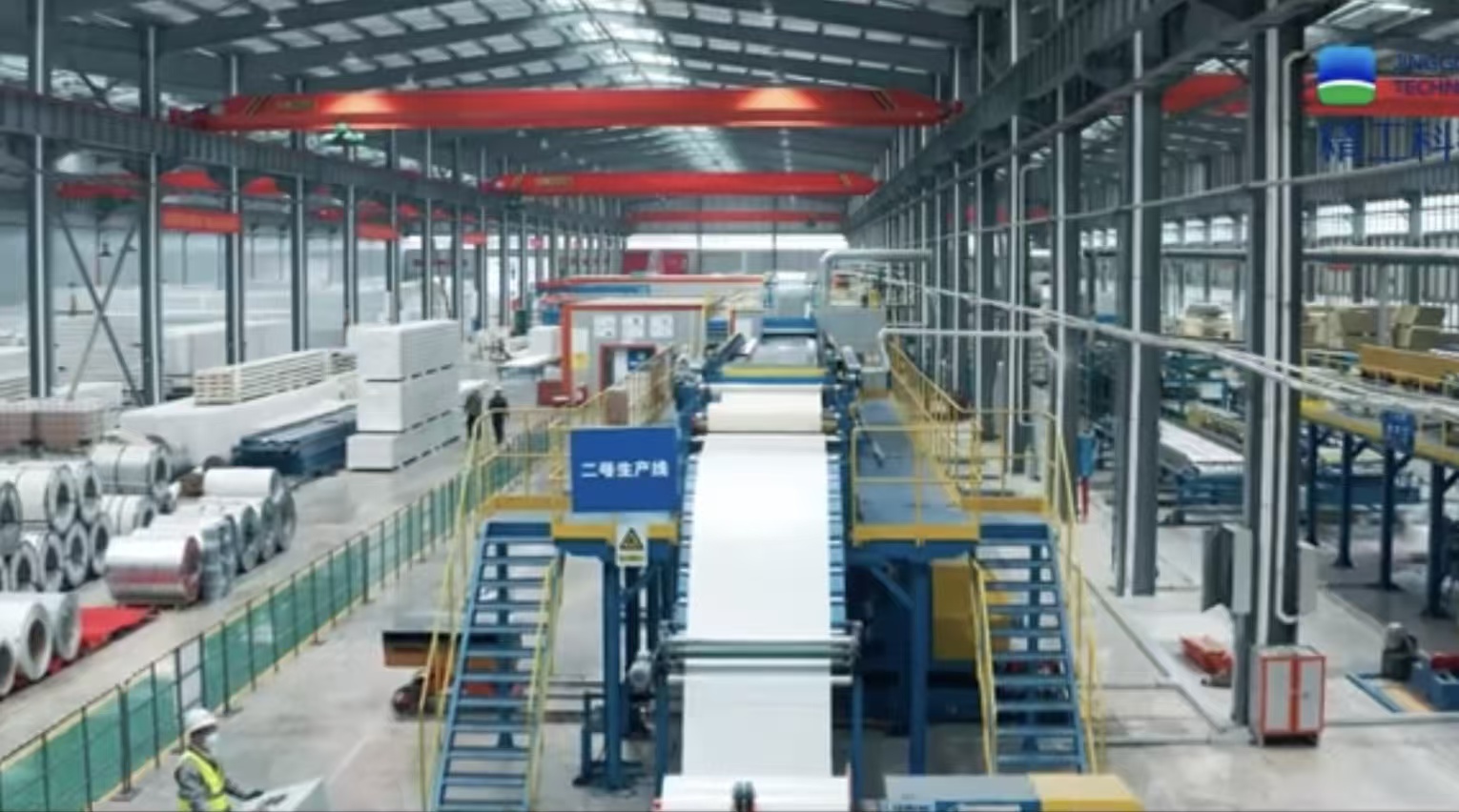
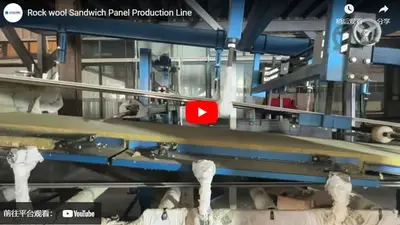
A leading example of versatile technology is the comprehensive sandwich panel line solutions from Jinggong. The systems support various core materials, including PU/PIR, EPS, and rockwool, through integrated decoiling, roll forming, laminating, and cutting processes. Designed for high efficiency and adaptability, Jinggong’s lines are deployed worldwide in facilities producing panels for industrial, commercial, and specialized applications, helping manufacturers meet diverse market demands with reliable performance and quality output.
Economic and Sustainability Drivers
The widespread application of these production lines is fueled by economic advantages: lower labor costs through automation, reduced material waste, and faster time-to-market. A single continuous line can achieve outputs of 800–2,500 m² per hour, making large-scale operations viable.
Sustainability also plays a growing role. Lines incorporating recycled cores, energy recovery, and low-emission processes align with green building certifications.
As urbanization accelerates and demand for energy-efficient buildings rises, these lines will remain vital across cold storage, industrial, commercial, modular, and specialty sectors. Their global application not only supports economic growth but also contributes to more resilient and sustainable infrastructure worldwide.
In conclusion, sandwich panel production lines are applied wherever modern construction demands speed, performance, and efficiency. From massive refrigerated warehouses in logistics hubs to clean rooms in high-tech facilities and modular homes in remote areas, these systems power the manufacturing backbone of the built environment. Technologies like those offered by Jinggong enable producers to stay competitive while addressing evolving industry needs.

 CN
CN
 EN
EN
 fr
fr  de
de  es
es  it
it  ru
ru  pt
pt  ar
ar  th
th  pl
pl  ro
ro 

 Call us on:
  Email Us:
  #1809, Jianhu Rd, Keqiao, Shaoxing, Zhejiang, China