Sandwich Panel Weight Explained: How Material Selection Impacts Structural Performance
When selecting sandwich panels for modern construction projects, buyers usually focus on insulation performance, fire resistance and durability. However, sandwich panel weight is another important factor that directly affects transportation, installation efficiency, structural loading and project costs. The final weight of a panel depends on multiple elements, including core material, density, thickness, steel facing and manufacturing accuracy.
Understanding sandwich panel weight per m2 helps engineers and buyers compare different panel configurations more effectively. A lightweight panel may reduce handling requirements and structural loads, while a heavier panel may provide advantages in strength, fire protection or acoustic performance. Therefore, the ideal panel is not always the lightest option, but the one that achieves the best balance between weight and functional requirements.
Why Panel Weight Matters in Modern Construction
Panel weight influences almost every stage of a construction project, from factory production and transportation to onsite installation. When thousands of square meters of panels are required, small differences in weight per square meter can significantly affect logistics planning and lifting requirements.
A lower weight of sandwich panel per m2 can make installation faster and reduce the demand on supporting structures. This is especially valuable for large industrial buildings, warehouses and modular construction projects where installation efficiency directly affects project schedules.
However, reducing weight should not come at the expense of required performance. The final selection needs to consider thermal insulation, mechanical strength, fire safety requirements and environmental conditions. Different applications may require different combinations of core materials and thicknesses.
For manufacturers, producing panels with stable weight and consistent quality depends heavily on the accuracy of the production system. Jinggong provides continuous sandwich panel production solutions covering PU/PIR, EPS and rock wool panel manufacturing, helping manufacturers produce different panel types according to market requirements.
How Core Materials Affect Weight and Strength
The core material is one of the most important factors influencing sandwich panel weight. Although the external steel sheets contribute to the overall mass, the insulation core determines much of the panel's density, thermal performance and structural characteristics.
Different core materials create different relationships between weight and performance:
PU/PIR core: Provides high thermal insulation efficiency with relatively low weight, making it suitable for applications where energy efficiency and lightweight construction are important.
EPS core: Offers economical insulation performance and lower density, which can help reduce overall panel weight in general building applications.
Rock wool core: Usually has higher density compared with some lightweight insulation materials, but provides advantages in fire resistance, sound insulation and high-temperature applications.
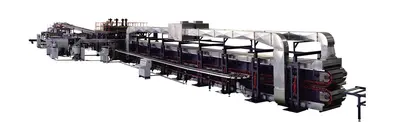
Jinggong's rock wool sandwich panel production line is designed for continuous manufacturing and integrates rock wool feeding, adhesive application, heating, laminating and cutting processes. The company’s published specifications indicate rock wool materials with a volume density of at least 70 kg/m³, showing how core density influences final panel characteristics.
Therefore, when evaluating sandwich panel weight per m2, buyers should not consider weight alone. The relationship between density, insulation performance and structural requirements determines whether a panel is suitable for a specific project.
Thickness, Density and Structural Performance
Panel thickness and density work together to determine the final performance of a sandwich panel. Increasing thickness usually increases material usage and overall weight, but it can also improve insulation performance and structural capability.
Density creates a similar balance. Higher-density cores often increase weight, but they may provide additional benefits depending on the application, such as improved impact resistance, fire performance or acoustic control.
| Factor | Lightweight Panel Design | Higher-Density Panel Design |
|---|
| Core density | Lower | Higher |
| Transportation | Easier handling | Requires more lifting consideration |
| Structural load | Reduced | Increased |
| Insulation performance | Depends on material | Depends on material |
| Fire and acoustic performance | Application dependent | Often improved with suitable materials |
| Typical application | Lightweight construction | Performance-focused projects |
The relationship between sandwich panel weight and structural performance is not simply "heavier is better." A properly designed lightweight panel may perform effectively in many applications, while a heavier panel may be preferred where additional protection or durability is required.
Selecting the Right Panel for Different Projects
Choosing the correct panel requires evaluating the complete project environment rather than focusing only on the final weight. Different buildings have different requirements, including insulation targets, fire regulations, installation methods and expected service conditions.
Key considerations include:
Building application: Warehouses, cold storage facilities, industrial plants and commercial buildings may require different panel structures.
Environmental conditions: Temperature differences, humidity levels and exposure conditions influence material selection.
Structural requirements: Panel thickness and density should match the expected loads and support system.
Installation efficiency: Projects with tight schedules may benefit from panels that are easier to transport and install.
For example, cold storage projects often prioritize insulation performance, while industrial facilities may require a balance between durability, fire protection and installation efficiency. The correct combination of core material and thickness determines whether the panel achieves the desired performance.
Jinggong's sandwich panel machinery supports different production requirements, including PU/PIR, rock wool and EPS sandwich panel lines. The equipment can be configured for different panel thicknesses, widths and production capacities, helping manufacturers supply panels for various construction applications.
Manufacturing High-Quality Panels with Jinggong Machine
Consistent sandwich panel weight starts with precise manufacturing control. Variations in core feeding, material distribution, bonding pressure or panel thickness can result in inconsistent product quality. A reliable production system is therefore essential for maintaining stable panel performance.
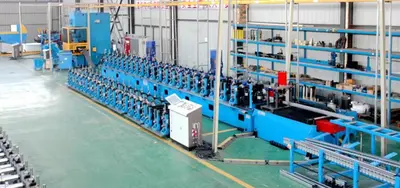
Jinggong's sandwich panel production solutions integrate multiple manufacturing processes, including material feeding, roll forming, bonding, laminating, cutting and stacking. Automated control systems help maintain production stability and improve efficiency during continuous operation.
Important manufacturing advantages include:
Accurate material control: Precise feeding systems help maintain consistent core distribution and panel thickness.
Stable lamination process: Controlled pressure and temperature improve bonding quality between metal sheets and insulation materials.
Flexible production capability: Different panel types and specifications can be produced according to market demand.
Jinggong's PU/PIR continuous sandwich panel production line uses PLC control, a high-pressure foaming system and a double-belt system to support consistent panel forming and surface quality. Its published configuration supports panel thickness ranges from 30–200 mm under specific production conditions.
Ultimately, evaluating sandwich panel weight per m2 requires a complete understanding of materials, thickness, density and application requirements. The best sandwich panels are not simply the lightest or heaviest products, but those that provide the right balance of structural performance, insulation efficiency and manufacturing consistency. With suitable material selection and advanced production equipment, manufacturers can deliver panels that meet modern construction demands while maintaining reliable quality.

 CN
CN
 EN
EN
 fr
fr  de
de  es
es  it
it  ru
ru  pt
pt  ar
ar  th
th  pl
pl  ro
ro 

 Call us on:
  Email Us:
  #1809, Jianhu Rd, Keqiao, Shaoxing, Zhejiang, China