Sandwich Panel Manufacturing Process: From Raw Materials to Finished Panels
Sandwich panels are engineered composite building elements widely used in industrial, commercial, and residential construction. Their rise in popularity is largely due to their excellent insulation performance, high strength-to-weight ratio, and rapid installation advantages. These panels cannot be created by simple manual labor—they require a structured, automated sandwich panel manufacturing process that ensures quality, repeatability, and high productivity.
What are Sandwich Panels?
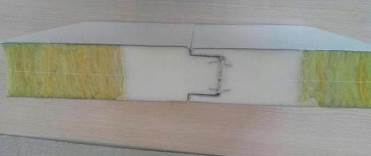
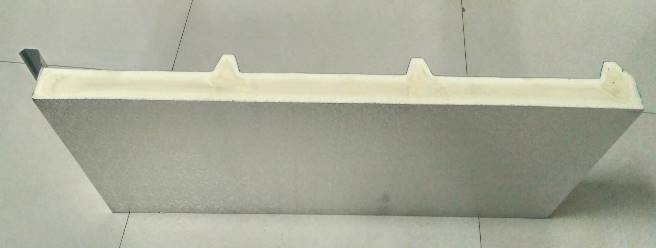
Sandwich panels are composite structures typically consisting of:
Two outer layers, usually pre-painted or galvanized steel sheets
An inner core material, such as polyurethane (PU), polyisocyanurate (PIR), expanded polystyrene (EPS), or rockwool
A bonding adhesive that unites the layers into a single structural unit
This layered makeup leads to high thermal resistance, structural integrity, and lightweight performance, making sandwich panels ideal for building envelopes, cold storage facilities, cleanrooms, and modular construction.
Understanding the manufacturing process requires familiarity with these core components and how they interact during production.
Core Steps in the Manufacturing Process
At a high level, the sandwich panel manufacturing process can be divided into several major stages:
Raw Material Preparation
Metal Sheet Decoiling & Roll Forming
Core Material Handling & Dispensing
Layer Bonding and Panel Assembly
Curing and Pressing
Cutting and Finishing
Quality Inspection and Packaging
1. Raw Material Preparation
Metal Facings: Typically galvanized or pre-painted steel coils with protective coatings.
Core Materials: PU/PIR foam formulations, EPS beads, rockwool , or other insulation materials.
Adhesives: Specialized bonding agents selected for their compatibility with the core and facings.
Proper preparation of raw materials is crucial for manufacturing consistency. Metal coils must be inspected for surface quality and dimensional accuracy. Core materials are checked for density, moisture content, and chemical properties. Adhesives are formulated and tested to ensure proper curing behavior during production.
2. Metal Sheet Decoiling & Roll Forming
Once raw materials are ready, the manufacturing process begins with metal sheet decoiling and roll forming.
Decoiling
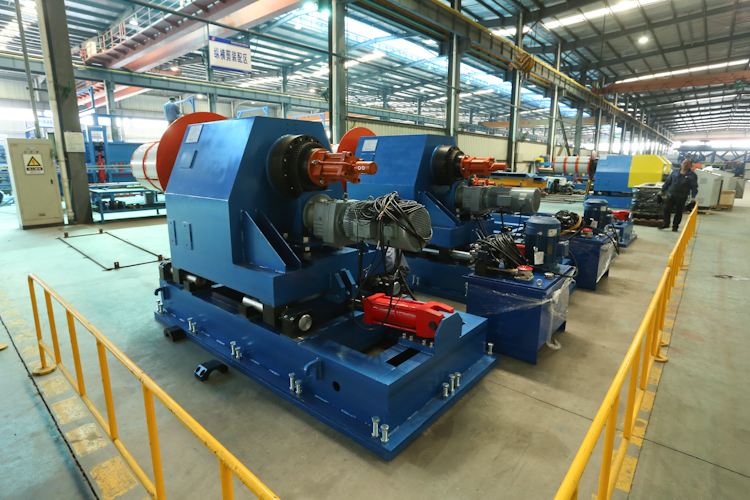
Decoiling is the first mechanical step, where large steel coils are unwound and fed into the production line. This requires a decoiler unit capable of supporting the coil weight and ensuring smooth feeding without distortion.
Roll Forming
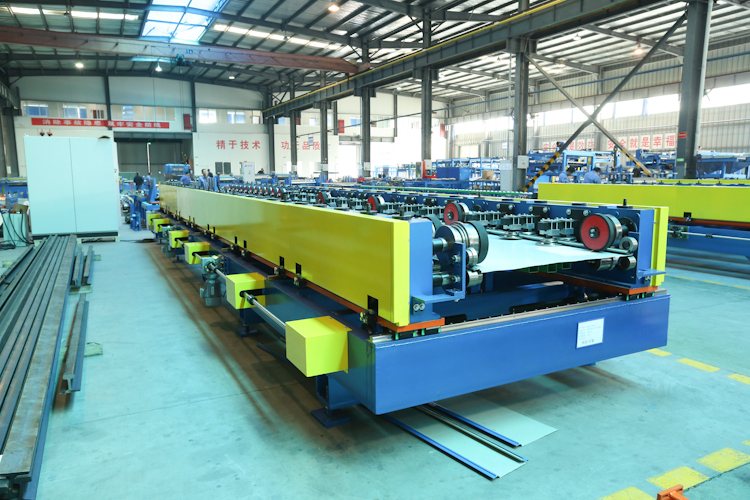
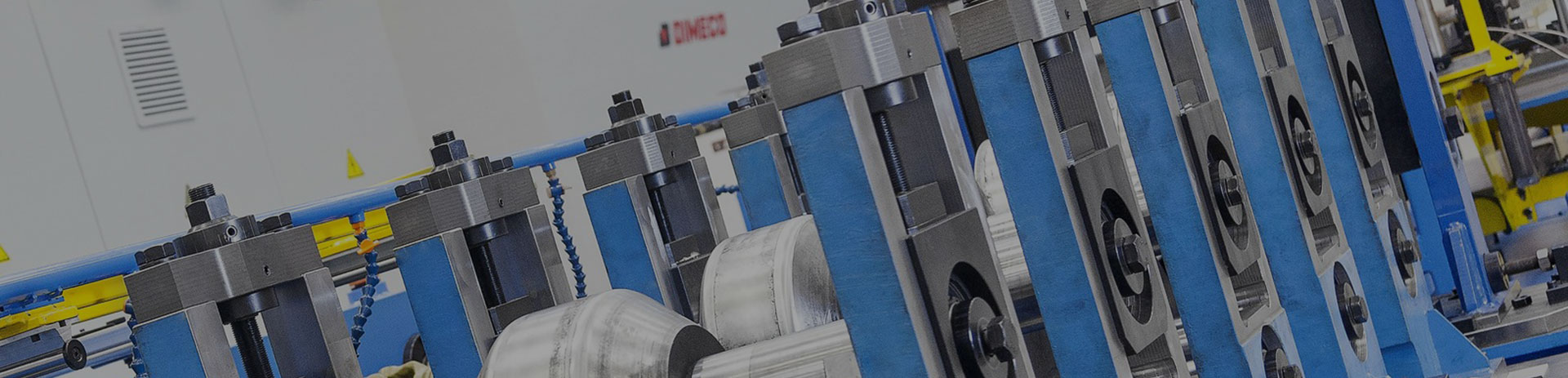
The flat metal sheets are then processed through a roll forming machine that shapes the steel into the desired panel profiles. Roll forming controls the panel’s final surface profile, edge engagement, and connection features.
Accurate roll forming ensures uniform panel thickness, proper engagement between adjacent panels, and structural performance in final installation.
Automated decoiling and roll forming are essential to maintaining quality and minimizing downtime.
3. Core Material Handling & Dispensing
The type of core material determines the handling and dispensing method:
PU/PIR Foam Cores
For polyurethane and PIR cores, a foaming machine with precise metering dispenses the insulating material between the shaped metal layers. This process must be carefully calibrated to control foam density, chemical ratio of components, and flow rate and pressure.
Modern production lines use advanced control systems to ensure consistent foam characteristics, essential for thermal performance and panel strength.
EPS Cores
EPS cores involve feeding pre-expanded beads or cut EPS blocks into the panel cavity. While EPS core production doesn’t require chemical mixing, it does demand precise placement to avoid voids or density inconsistencies.
Rockwool Cores
Rockwool cores are installed using systems that feed and compress mineral wool fibers into the panel cavity. Specialized equipment ensures uniform core density and alignment.
In all cases, Jinggong’s sandwich panel production lines provide tailored core handling systems that enable consistent dispensing and alignment, regardless of core type, improving both speed and quality.
4. Layer Bonding and Panel Assembly
Once the metal facings and core material are in position, the next step is panel assembly and bonding.
Sandwich panel production lines apply bonding agents or hot melt adhesives to ensure that the core material firmly adheres to both facings. In PU/PIR panels, the foaming process itself creates a chemical bond with the metal skin. In EPS or rockwool panels, adhesives may be necessary to enhance bonding strength.
Accurate control of adhesive application and timing is critical to achieving high shear strength, dimensional stability, long-term durability.
Automated bonding systems integrated into production lines reduce variability and improve the reliability of panel performance over time.
5. Curing and Pressing
Following assembly, panels proceed to the curing and pressing phase. This is where the composite structure reaches its final strength and stability.
Pressing
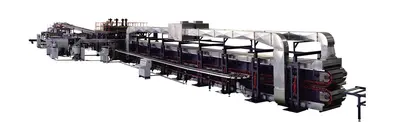
Sandwich panel line often includes a double belt press system that applies controlled heat and pressure to the panel assembly. The belt press system ensures intimate contact between the core and facings throughout the panel length.
Curing
In PU/PIR manufacturing, curing involves allowing the foam to expand and solidify while the panel is held under pressure. The temperature and dwell time in the curing zone are carefully controlled to achieve consistent chemical reactions.
The curing and pressing process are among the most important for final panel performance, affecting bonding strength, structural rigidity, thermal insulation properties.
Production systems from manufacturers like Jinggong feature precision control over heat, pressure, and speed to ensure consistent curing across all panels.
6. Cutting and Finishing
After curing, the sandwich panels move down the line to the cutting station, where they are cut to the required lengths using precision cutting tools.
Cutting must be synchronized with line speed to ensure accuracy without disrupting production flow.
Panel finishing may involve edge trimming, protective film application, marking or labeling for installation. Automated finishing systems integrated into production lines reduce manual labor and improve consistency.
7. Quality Inspection and Packaging
The final step in the sandwich panel manufacturing process is quality inspection and packaging.
Inspection
Automated systems check key parameters such as panel thickness, surface quality, core density (using non-destructive techniques), and edge integrity. Quality inspections ensure that panels meet customer specifications and industry standards.
Packaging
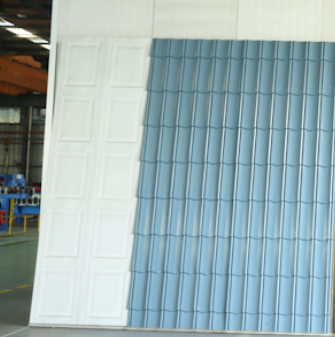
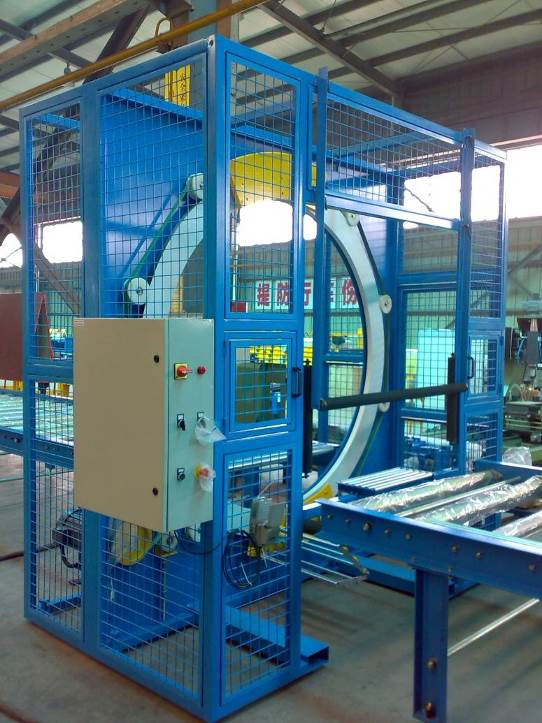
Finished panels are stacked, wrapped, and packaged for transport. Efficient packaging ensures panels arrive at construction sites without damage and are ready for installation.
Production lines from Jinggong often include automated stacking and packaging units, increasing throughput while reducing handling damage.
Automation and Digital Control in Modern Manufacturing
The evolution of sandwich panel manufacturing has been driven by advances in automation and digital control systems. Modern production lines incorporate:
PLC (Programmable Logic Controller) systems
Real-time sensors to monitor pressure, temperature, and speed
Human-machine interfaces (HMI) for operator control
Data logging to record production parameters and enable traceability
These technologies improve reliability, reduce downtime, and enable rapid response to production anomalies.
Manufacturers operating at higher automation levels enjoy greater productivity, reduced labor dependency, higher consistency, and lower waste.
Common Challenges and Best Practices
Even with advanced production systems, certain challenges must be addressed for optimal results:
Material Variability
Core and facing materials must be handled precisely to avoid defects. Quality control at the raw material stage prevents production issues downstream.
Process Synchronization
Each stage, forming, foaming, curing, cutting, must be synchronized to avoid bottlenecks or quality inconsistencies. Integrated control systems help maintain consistent process flow.
Maintenance
Regular maintenance of critical components like roll formers, foaming machines, and double belt systems ensures long-term performance.
Training
Operators must understand both mechanical and digital aspects of the production line to maximize uptime and maintain quality standards.
By adopting these best practices and leveraging advanced systems, manufacturers can improve throughput, reliability, and overall output quality.
The sandwich panel manufacturing process is a sophisticated series of steps that transform raw materials into high-performance composite panels used throughout modern construction and industrial applications. From raw material preparation and metal roll forming to core dispensing, bonding, curing, cutting, and final inspection—each stage plays a critical role in determining panel performance.
Automated sandwich panel production lines enable manufacturers to achieve consistent product quality, higher productivity, and lower operating costs. By embracing digital control, integrated automation, and precision engineering, modern production systems deliver panels with reliable performance while meeting demanding project timelines. Understanding the sandwich panel manufacturing process is essential for manufacturers, engineers, and construction professionals looking to optimize production, expand product lines, and deliver superior building solutions.

 CN
CN
 EN
EN
 fr
fr  de
de  es
es  it
it  ru
ru  pt
pt  ar
ar  th
th  pl
pl  ro
ro 

 Call us on:
  Email Us:
  #1809, Jianhu Rd, Keqiao, Shaoxing, Zhejiang, China