Continuous PU Sandwich Panel Production Line for Cold Chain and Insulated Panel Manufacturing
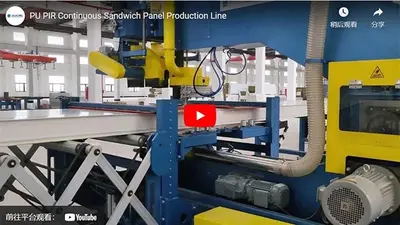
A continuous PU sandwich panel production line is used to produce insulated PU or PIR panels through integrated sheet forming, foaming, curing, cutting, cooling, stacking, and packing processes. For manufacturers serving cold chain, industrial building, modular construction, and insulated door markets, this line is not only a machinery investment. It is the production foundation behind stable panel quality, reliable project delivery, and long-term customer trust.
Jinggong's PU/PIR continuous sandwich panel production line is designed as an automatic system covering major stages from decoiling and roll forming to foaming, solidification, band saw cutting, cooling, stacking, and packing. This makes it suitable for manufacturers that need repeatable production capacity for insulated sandwich panels.
What Buyers Want to Know Before Investing in a PU/PIR Line?
Most buyers searching for a PU sandwich panel production line already understand the basic product category. Their real search intent is more practical: they want to know whether the line can help their factory produce panels that customers will accept, install smoothly, and reorder.
A serious buyer usually wants to confirm:
Whether the line can keep foam quality stable during long production runs
Whether panel thickness, length, and surface finish remain consistent
Whether the production process can support cold room, roof, wall, and door panels
Whether the factory can handle larger project orders with predictable delivery
Whether the supplier can support installation, commissioning, training, and service
This is why a strong article should not only describe the machine. It should explain how the line helps manufacturers solve real production and business problems.
Why Cold Chain Projects Depend on Foam Consistency?
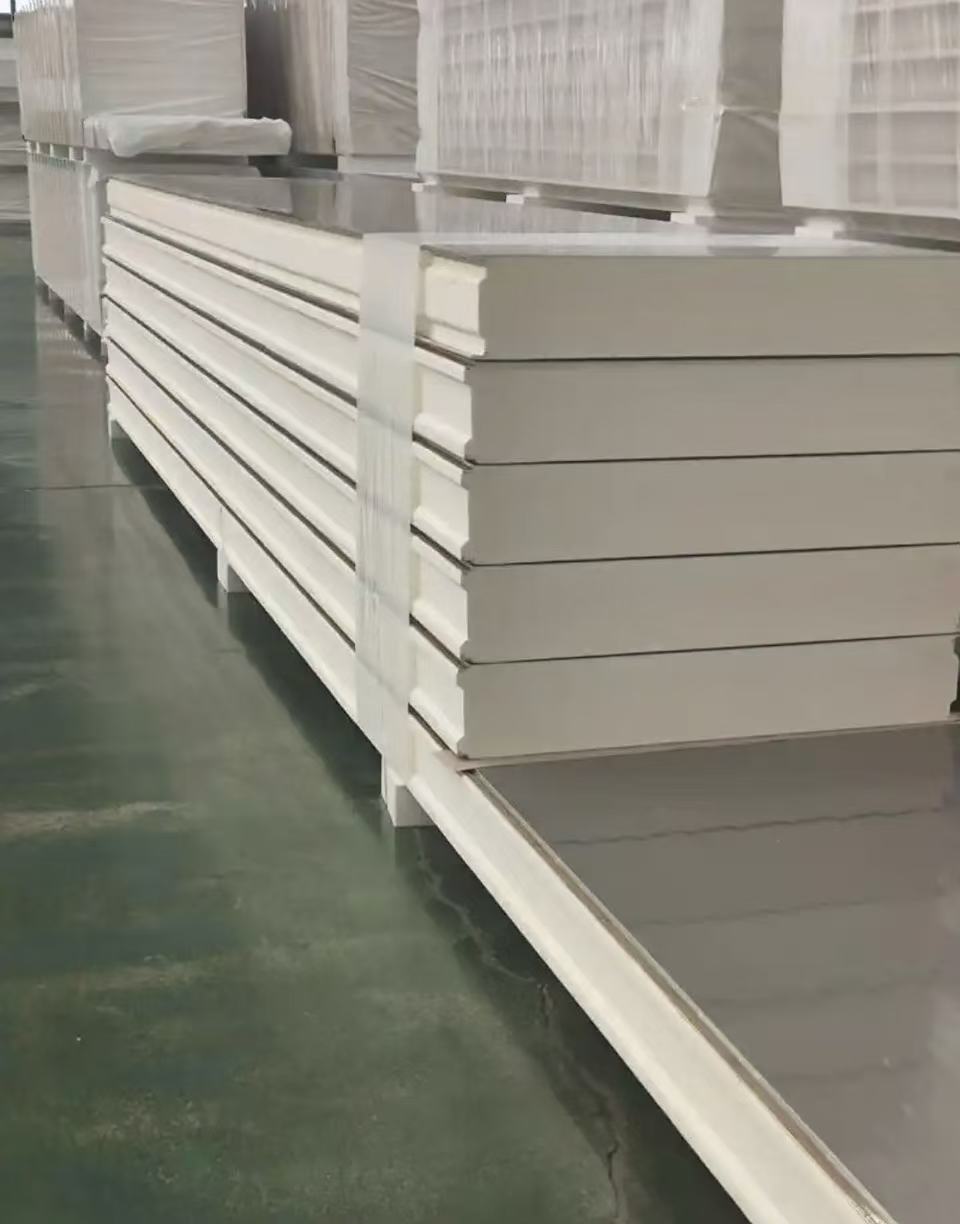
Cold chain applications are one of the most important markets for PU and PIR sandwich panels. Cold rooms, refrigerated warehouses, frozen logistics centers, food processing areas, and storage facilities all need insulated panels that can support stable temperature control and efficient installation.
Foam consistency is the core quality factor in these applications. If the foam core has uneven density, weak bonding, or unstable curing, the panel may look acceptable on the surface but create hidden risks after installation. In a cold chain project, these risks can affect insulation performance, energy use, panel durability, and customer confidence.
A reliable PU/PIR sandwich panel line should help manufacturers control raw material metering, foam mixing, injection uniformity, preheating, curing, and panel thickness. For buyers planning to supply cold rooms, refrigerated warehouses, industrial roof panels, or insulated wall panels, Jinggong's continuous PU sandwich panel production line provides a complete production solution from sheet forming to foaming, curing, cutting, cooling, stacking, and packing.
For buyers, stable foam quality is not just a technical detail. It is directly connected to whether the factory can supply panels for real cold storage projects and win repeat orders from contractors, distributors, and project owners.
How Continuous Production Improves Project Delivery?
Insulated panel orders are often project-based. A contractor may need hundreds or thousands of square meters of panels delivered according to a fixed construction schedule. A cold storage project may require panels, doors, refrigeration equipment, and installation teams to arrive in a coordinated sequence.
Continuous production helps manufacturers create a more predictable output rhythm. By connecting sheet feeding, roll forming, foaming, curing, cutting, cooling, stacking, and packing, the factory can reduce interruptions and improve production planning.
For manufacturers, this supports:
More predictable lead time
Better batch-to-batch consistency
Lower rework and waste risk
More stable panel dimensions
Smoother packing and shipment
Stronger confidence when accepting larger project orders
This is why buyers should not evaluate the production line only by equipment price. They should also consider how the line supports project delivery, customer satisfaction, and repeat orders.
Which Product Markets Can This Line Support?
A PU/PIR sandwich panel line can help manufacturers build a broader insulated panel product portfolio. A factory may begin with cold room panels and later expand into industrial wall panels, roof panels, garage door panels, container room panels, or decorative insulation panels.
This flexibility matters because market demand does not always grow evenly. In some regions, cold chain construction may create the strongest demand. In other regions, industrial roofing, prefabricated buildings, or insulated doors may bring more business opportunities.
Common target applications include:
For buyers planning long-term factory development, application flexibility should be considered before finalizing the line configuration.
What Buyers Should Prepare Before Requesting a Configuration?
A clear inquiry helps the supplier recommend a more suitable line. Instead of only asking for a general quotation, buyers should first clarify their target market, product specifications, and factory conditions.
The most important preparation includes target panel applications, required panel thickness, panel width and length, metal sheet material, PU or PIR formulation direction, expected daily or monthly output, workshop layout, local power conditions, operator experience, and packing requirements.
This preparation reduces the risk of buying a line that looks acceptable in general specifications but does not match the factory’s actual business model. A manufacturer serving cold room contractors may need different panel sizes and joint requirements from a manufacturer serving industrial roofing customers. A good configuration should match the buyer's real market, not only the machine brochure.
How Jinggong Supports Insulated Panel Manufacturers?
For manufacturers planning to build or upgrade insulated panel production, Jinggong's PU/PIR production solution can be positioned as a complete line rather than a single machine.
The value of the line is in the connection between production sections. Decoiling, roll forming, foaming, double belt curing, cutting, cooling, stacking, and packing must work together to produce panels with stable quality. According to Jinggong's product information, the PU/PIR line supports automatic production from uncoiling to packing, with the product page also listing cold storage, roof, wall, door, decorative, and container room panel applications.
For buyers, this matters because real factory operation is more complex than a product demonstration. A strong supplier should understand machinery configuration, panel applications, installation requirements, and long-term production support.
A continuous PU sandwich panel production line is a strategic investment for manufacturers serving cold chain, industrial building, modular construction, and insulated panel markets. Its value comes from foam consistency, continuous production, application flexibility, project delivery confidence, and supplier support.

 CN
CN
 EN
EN
 fr
fr  de
de  es
es  it
it  ru
ru  pt
pt  ar
ar  th
th  pl
pl  ro
ro 

 Call us on:
  Email Us:
  #1809, Jianhu Rd, Keqiao, Shaoxing, Zhejiang, China