Building an Efficient Polyurethane Production Line: From Planning to Stable Production
Building a reliable polyurethane production line requires more than purchasing individual machines and connecting them together. Production capacity, raw material handling, foaming control, panel specifications, automation and energy consumption all influence whether a plant can maintain stable output after commissioning.
For manufacturers planning a new PU production project, the initial focus is often on pu foam manufacturing plant cost or the price of individual equipment. However, the real investment decision should consider the entire production workflow and long-term operating efficiency. A well-planned system can reduce material waste, improve product consistency and make future capacity expansion easier.
Planning a Production Line Around Your Output Goals
Production planning should begin with the products the plant is expected to manufacture rather than with a specific machine model. Panel thickness, width, density, facing materials, daily output and operating hours all influence the required configuration.
A manufacturer producing a limited range of standard panels may need a different setup from a facility serving multiple construction or insulation applications. The expected production volume also determines whether continuous processing or another production pattern is more appropriate.
Before estimating foam manufacturing plant cost, buyers should establish several basic parameters:
Production capacity: Define target hourly, daily and annual output and leave reasonable capacity for future demand.
Product specifications: Confirm panel thickness, width, length, density and facing material requirements.
Process configuration: Determine which stages need automated feeding, forming, foaming, curing, cutting, cooling and stacking.
Plant conditions: Available floor space, utilities, ventilation, compressed air and electrical capacity can affect equipment layout.
Expansion plans: A modular production concept can make it easier to increase output or introduce additional product specifications later.
This approach prevents manufacturers from comparing equipment prices without understanding how each machine contributes to the complete production process.
Selecting Equipment for Stable Polyurethane Processing
A polyurethane production line typically combines several interconnected stages. Depending on the product, the system may include decoiling and roll forming equipment, preheating, polyurethane foaming equipment, conveying and forming systems, cutting, cooling, stacking and packing.
The equipment must work as a coordinated system. For example, unstable foaming conditions can affect panel density and dimensional consistency, while inaccurate forming or cutting can create downstream quality problems even when the polyurethane formulation itself is correct.
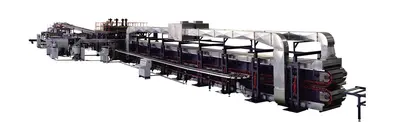
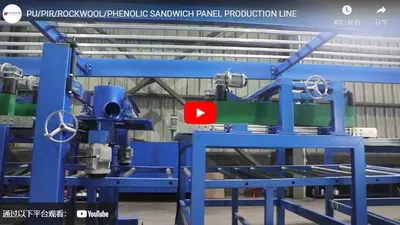
Jinggong's published PU/PIR continuous sandwich panel production line integrates decoiling, roll forming, preheating, high-pressure foaming, double-belt forming, cutting, cooling, stacking and packing. The listed configuration is designed for panel widths of 600–1,200 mm and thicknesses of 30–200 mm, with production speed adjustable within the specified operating range. Actual output depends on product specifications and production conditions.
The selection of polyurethane machinery should therefore focus on process compatibility rather than isolated equipment specifications.
Improving Product Consistency Through Automation
Automation is one of the most important factors in moving from experimental or manually controlled production toward stable industrial manufacturing. When feeding, foaming, temperature, conveying and cutting processes are coordinated automatically, operators can reduce variation between production runs.
A modern system can use PLC-based control to coordinate different production sections while monitoring critical process conditions. In polyurethane panel production, stable metering and mixing of components are especially important because variations can influence foam density, curing behavior and final insulation performance.
Jinggong's PU/PIR production system incorporates PLC computer control and a high-pressure foaming system for controlled metering and mixing. Its double-belt forming system is designed to maintain consistent panel thickness and surface flatness during continuous production.
Automation also helps manufacturers reduce dependence on manual intervention. Instead of relying on operators to repeatedly adjust each production stage, coordinated controls can maintain more consistent process conditions.
Reducing Energy Consumption and Operating Costs
Energy consumption should be considered during the initial plant design rather than after the equipment has already been installed. Heating, foaming, curing, conveying and auxiliary systems can all contribute to the total operating cost.
For manufacturers calculating pu foam manufacturing plant cost, it is useful to distinguish between initial equipment investment and recurring operating expenses. A system with a higher initial price may provide better long-term economics if it improves material utilization, reduces downtime and uses energy more efficiently.
| Cost Area | Main Consideration | Potential Efficiency Impact |
|---|
| Raw materials | Foaming ratio and material utilization | Reduces material waste |
| Heating | Temperature control and heat management | Limits unnecessary energy use |
| Production speed | Stable continuous operation | Improves output per operating hour |
| Labor | Degree of automation | Reduces repetitive manual work |
| Maintenance | Component quality and accessibility | Helps reduce downtime |
Jinggong's published production-line design incorporates temperature control, mechanical, electrical, hydraulic and pneumatic systems into an integrated production process. Its heated-air recycling oven is used for PU foaming and solidification temperature management, supporting more controlled processing conditions.
Energy efficiency should therefore be evaluated together with productivity, yield and maintenance requirements rather than treated as a standalone specification.
Complete Turnkey Solutions from Jinggong Machine
A successful polyurethane production line should provide a stable path from raw material preparation to finished product handling. This is why turnkey planning can be more practical than purchasing unrelated machines from multiple sources and attempting to integrate them later.
Jinggong provides continuous PU/PIR sandwich panel production solutions covering key processes from decoiling and roll forming to foaming, double-belt forming, cutting, cooling, stacking and packing. The company's equipment configuration also supports different metal facing materials, including color steel, galvanized and aluminum sheets under the published specifications.
For manufacturers evaluating foam manufacturing plant cost, this integrated approach makes it possible to assess equipment investment alongside capacity, automation, energy consumption and production requirements.
Ultimately, building an efficient polyurethane plant is a process-design challenge rather than simply a machinery purchasing exercise. By defining output targets first, selecting compatible polyurethane machinery, automating critical processes and controlling energy use, manufacturers can establish a more predictable production environment.
Jinggong Machine's integrated production solutions provide a practical foundation for manufacturers looking to move from plant planning to stable, repeatable polyurethane panel production.

 CN
CN
 EN
EN
 fr
fr  de
de  es
es  it
it  ru
ru  pt
pt  ar
ar  th
th  pl
pl  ro
ro 

 Call us on:
  Email Us:
  #1809, Jianhu Rd, Keqiao, Shaoxing, Zhejiang, China