5 Common Mistakes When Choosing a PUF Panel Manufacturing Machine
Choosing a PUF panel manufacturing machine is a major decision for manufacturers entering or expanding the insulated panel market. The right equipment can improve production consistency, reduce material waste and support stable output, while a poorly matched system may create higher operating costs long after the initial purchase.
The challenge is that equipment selection cannot be reduced to machine price or maximum production speed. Panel dimensions, polyurethane formulation, required capacity, automation level, energy consumption and after-sales support all influence the actual return on investment. Before purchasing a PUF panel machine, buyers should therefore evaluate the complete production process rather than one specification.
Mistake 1: Choosing Equipment Based Only on Price
A lower purchase price can look attractive during the initial procurement stage, but it does not necessarily mean lower total production cost. A cheaper system may have limitations in automation, process control, component quality or future expansion that become more expensive over time.
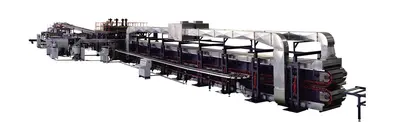
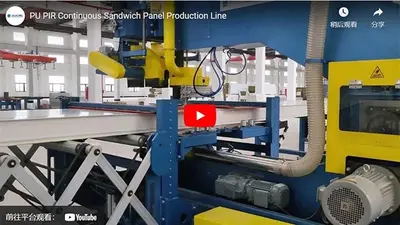
For a PUF panel making machine, buyers should compare the complete equipment configuration and its ability to meet actual product requirements. A continuous system, for example, may integrate decoiling, roll forming, preheating, foaming, curing, cutting, cooling, stacking and packing. Jinggong's continuous PU/PIR system incorporates these processes into an automated production workflow.
The better purchasing question is therefore not “Which machine has the lowest price?” but “Which configuration can produce the required panels consistently at an acceptable long-term operating cost?”
Mistake 2: Ignoring Production Capacity Planning
Capacity planning should happen before equipment specifications are finalized. A line designed for a small production target may become a bottleneck when demand increases, while an oversized system can leave expensive equipment underutilized.
Manufacturers should first estimate required output based on panel length, width, thickness, working hours, product mix and expected utilization. They should also distinguish between theoretical maximum speed and realistic production output.
Jinggong's published continuous PU/PIR production line has an adjustable production speed of 3–8 m/min for the listed configuration, with suitable panel widths of 600–1,200 mm and thicknesses of 30–200 mm. The company also publishes a maximum production speed of 12 m/min and annual output of up to 1 million m² for its described system configuration. Actual production depends on panel specifications and operating conditions.
A practical capacity assessment should consider:
Current demand: Estimate realistic daily and annual production requirements instead of purchasing according to optimistic sales forecasts.
Future growth: Consider whether the line can accommodate higher demand or a broader product range later.
Product mix: Different panel thicknesses, profiles and facing materials can affect actual production speed.
Downstream capacity: Cutting, cooling, stacking and packing must keep pace with the forming and foaming sections.
Capacity planning is especially important when comparing a continuous polyurethane production line with a discontinuous system. Jinggong explains that continuous production is generally more suitable for higher-output requirements, while discontinuous production can be advantageous for specialized products or lower-capacity applications.
Mistake 3: Overlooking Automation and Energy Efficiency
Automation should not be treated as an optional feature added simply to make equipment look more advanced. In polyurethane panel production, coordinated control can directly affect material consistency, production speed and labor requirements.
A modern PUF panel machine may integrate PLC control, automatic feeding, digital measurement, foaming control, synchronized conveying, cutting and stacking. Jinggong's PU/PIR line uses PLC computer control, while its high-pressure foaming system provides controlled metering and mixing. Its double-belt system is designed to help maintain flat panel surfaces and consistent thickness.
Energy efficiency should be evaluated alongside automation. Heating, foaming, curing, conveying and hydraulic systems all contribute to operating consumption. For example, Jinggong's equipment uses a heated-air recycling oven to control PU foaming and solidification temperatures, while its production-line design integrates mechanical, electrical, hydraulic, pneumatic and temperature-control technologies.
A more efficient system is therefore one that coordinates processes effectively rather than simply adding more automated functions.
Mistake 4: Failing to Evaluate After-Sales Support
Even a technically advanced machine can become a costly investment if technical support is difficult to access. A production line includes many interconnected systems, so troubleshooting may require knowledge of electrical controls, mechanical components, polyurethane foaming, hydraulic systems and temperature control.
Before purchasing, buyers should evaluate the supplier's technical documentation, installation support, operator training, spare-parts availability and response process. It is also worth clarifying which components are standard, which parts require special maintenance and how software or PLC support is handled.
| Evaluation Area | What Buyers Should Check | Why It Matters |
|---|
| Equipment configuration | Complete process and component list | Prevents unexpected gaps |
| Capacity | Rated speed and realistic output | Supports accurate production planning |
| Automation | PLC, measurement and process control | Improves consistency and labor efficiency |
| Energy use | Heating, foaming and drive systems | Affects long-term operating costs |
| Service | Installation, training and spare parts | Reduces potential downtime |
This evaluation is particularly important for manufacturers purchasing a complete polyurethane production line, because downtime in one section can affect the entire production sequence.
Why Jinggong Machine Delivers Long-Term Value
Selecting a PUF panel manufacturing machine should ultimately be based on process compatibility, production goals and long-term operating value. Jinggong provides continuous PU/PIR sandwich panel production solutions integrating decoiling, roll forming, preheating, high-pressure foaming, double-belt forming, cutting, cooling, stacking and packing.
The company's published system configuration supports metal sheets such as color steel, galvanized and aluminum sheets, with panel widths of 600–1,200 mm and thicknesses of 30–200 mm under the stated specifications. The production line also combines PLC control, temperature management and automated material handling to create a continuous manufacturing workflow.
Jinggong also has experience across different sandwich panel production technologies, including PU/PIR and EPS systems. This broader equipment capability can be valuable for manufacturers considering future product expansion rather than purchasing a single-purpose machine.
Ultimately, the best PUF panel making machine is not necessarily the cheapest or the fastest model. It is the system that matches product specifications, capacity targets, automation requirements, energy considerations and service expectations. By evaluating these factors together, manufacturers can reduce procurement risks and build a more stable production operation.
For companies planning a new PUF panel manufacturing machine investment, a complete assessment of equipment configuration, production capacity and long-term support can make the difference between simply purchasing machinery and establishing a production system capable of delivering consistent output and sustainable growth.

 CN
CN
 EN
EN
 fr
fr  de
de  es
es  it
it  ru
ru  pt
pt  ar
ar  th
th  pl
pl  ro
ro 

 Call us on:
  Email Us:
  #1809, Jianhu Rd, Keqiao, Shaoxing, Zhejiang, China