Steel Tile Forming Machine: Matching Profile Design With Speed, Accuracy and Production Needs
A steel tile forming machine must do more than produce a recognizable roof profile. The forming process needs to maintain dimensional consistency while handling the selected material, thickness, profile geometry, and required production speed. For manufacturers supplying roofing systems, these factors directly affect downstream cutting, installation, appearance, and production efficiency.
Choosing equipment therefore starts with the tile profile and production requirements rather than machine speed alone. A suitable configuration should provide stable forming, controlled material feeding, accurate cutting, and enough flexibility for the expected product range.
What Determines the Performance of a Steel Tile Forming Machine?
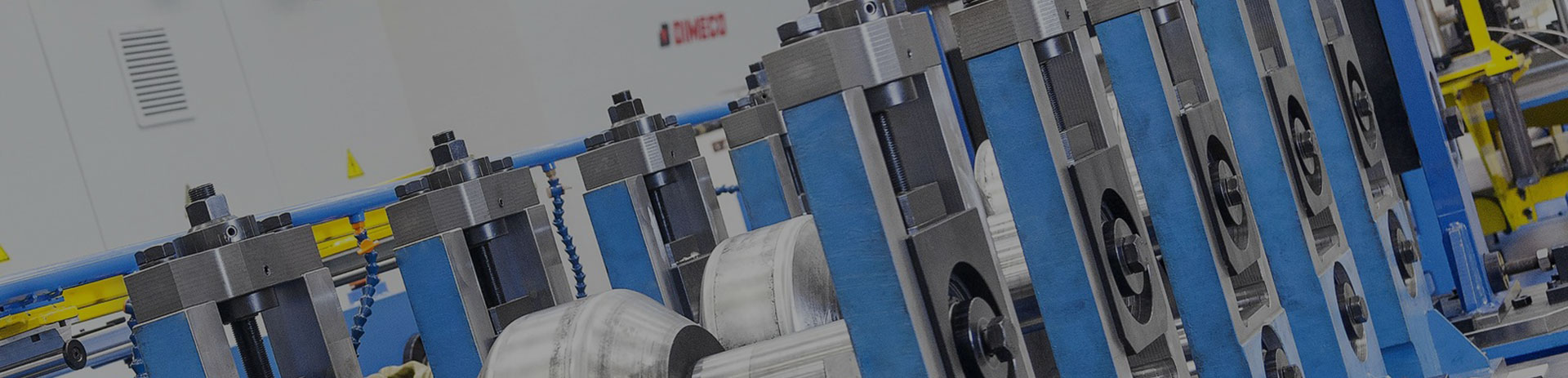
The performance of a forming line is closely connected to the relationship between the material and the roll-forming tooling. Steel coils with different thicknesses and mechanical properties can behave differently during forming, while deeper or more complex profiles may require carefully designed forming passes.
| Factor | Why It Matters | What Buyers Should Check |
|---|
| Material thickness | Affects forming load and tooling requirements | Supported thickness range |
| Coil width | Determines feeding and profile layout | Maximum and minimum width |
| Profile geometry | Influences forming-pass design | Wave, rib, and pitch dimensions |
| Line speed | Affects production capacity | Rated and practical operating speed |
| Cutting method | Determines finished-length accuracy | Cut-to-length control and tolerance |
| Control system | Coordinates the production sequence | PLC, encoder, and operator interface |
A well-configured line should keep the strip properly guided from entry through forming and cutting. For buyers comparing different suppliers, these technical details provide a more useful basis than headline speed alone.
How Profile Design Affects Roll Forming Configuration
Roofing profiles are not interchangeable. Differences in wave height, pitch, rib shape, edge geometry, and effective coverage can change the number and arrangement of forming stations.
A profile with relatively simple geometry may require fewer forming stages, while a more demanding design needs progressive deformation to reduce stress and protect the finished shape. Tooling should therefore be developed around the actual profile drawing instead of relying only on a general machine specification.
Material characteristics also matter. If the machine is expected to process more than one thickness or material grade, the supplier should confirm whether the existing tooling and forming system can accommodate those variations.
This is particularly important when evaluating a glazed roof tile roll forming machine. The visual appearance of the finished tile depends on maintaining consistent dimensions through the forming process, especially when the profile contains multiple curves or decorative sections.
When Should Buyers Consider a Higher-Speed Tile Roll Forming Machine?
Production speed is useful only when the complete line can maintain stable operation at that speed. A faster forming section does not automatically create higher effective output if feeding, cutting, material handling, or downstream operations become bottlenecks.
Consider higher-speed equipment when:
Daily production volume justifies a higher throughput target.
Coil feeding and material handling can support continuous operation.
The profile can be formed consistently at the intended speed.
The cutting system can maintain synchronization with the forming line.
Operators can manage setup and changeover without creating excessive downtime.
For a manufacturer comparing a tile roll forming machine for sale, it is useful to request actual production conditions rather than comparing advertised maximum speeds. Ask how the quoted speed relates to the selected material, profile, thickness, and finished product length.
How Cutting and Length Control Affect Finished Tile Quality
Forming creates the profile, but cutting determines the final product length. If the cutting system is poorly synchronized with the moving strip, finished tiles may show dimensional variation or require additional handling.
Encoder feedback and coordinated control allow the machine to identify the required cutting position while the material continues through the line. The control system should also make it practical to enter different product lengths and production quantities.
For roofing manufacturers, repeatable cutting is particularly important when tiles are supplied in standardized lengths. Consistency helps reduce installation adjustments and makes production planning easier.
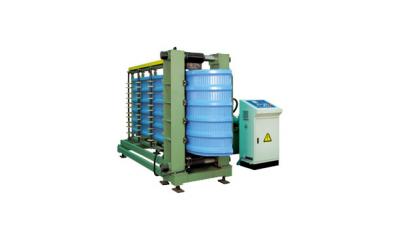
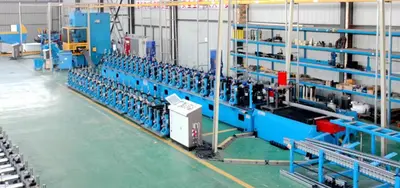
JINGGONG Technology's high-speed tile forming equipment can be evaluated according to these same principles, including the relationship between profile requirements, forming performance, speed, and cutting control. Buyers can review the high-speed tile forming machine configuration when developing a line specification.
What Should Buyers Confirm Before Ordering the Machine?
Before requesting a quotation, prepare the information that determines the machine configuration. This helps suppliers provide a more meaningful proposal and reduces the risk of comparing machines with different assumptions.
A practical RFQ should include:
Profile drawing: Provide the complete cross-sectional dimensions, including pitch, height, and effective width.
Material information: State the material type, thickness range, coil width, and relevant mechanical properties when available.
Production target: Specify expected pieces per hour or daily output rather than requesting the highest possible line speed.
Finished dimensions: Provide standard product lengths and cutting requirements.
Automation requirements: Clarify whether automatic feeding, PLC control, length setting, counting, and other functions are required.
Factory conditions: Consider available space, power supply, material handling, and installation requirements.
These details allow a supplier to determine whether a standard configuration is appropriate or whether the forming stations, tooling, cutting system, or control arrangement should be adapted.
Conclusion: Matching a Steel Tile Forming Machine to the Real Production Task
A steel tile forming machine should be selected around the complete production requirement rather than a single specification such as maximum speed. Profile geometry, material thickness, coil width, forming stability, cutting accuracy, and automation all influence practical output. A clear profile drawing and complete material information also make supplier quotations easier to compare. For manufacturers evaluating equipment, the goal is to establish a balanced production line that can repeatedly deliver the required tile dimensions and surface profile under actual operating conditions.
FAQ
What materials can a steel tile forming machine process?
It depends on the machine configuration. Buyers should confirm the supported material type, thickness, coil width, and mechanical properties with the supplier before ordering.
Is a high-speed tile forming machine always better?
Not necessarily. The useful production rate depends on whether feeding, forming, cutting, and material handling can operate reliably at the target speed.
What information is needed for a tile forming machine quotation?
A profile drawing, material specifications, coil dimensions, finished product lengths, production target, and automation requirements are typically useful starting information.
How does profile geometry affect the machine?
Profile depth, pitch, curves, and edge features influence roll tooling and the forming sequence. More complex profiles may require a more carefully engineered forming arrangement.
Why is cutting accuracy important for roofing tiles?
Consistent cutting helps maintain the specified finished length and reduces adjustments during downstream handling and installation.
Can one machine produce different tile profiles?
Some machines can be designed for multiple profiles, but compatibility depends on tooling, material specifications, changeover requirements, and the machine's original configuration.

 CN
 EN
 fr
 de
 es
 it
 ru
 pt
 ar
 th
 pl
 ro


 Call us on:
 Email Us:
 #1809, Jianhu Rd, Keqiao, Shaoxing, Zhejiang, China