Choosing among downpipe roll forming machine manufacturers requires more than comparing machine prices or maximum forming speeds. Downpipes need consistent cross-sectional dimensions, stable feeding, accurate cutting, and reliable forming throughout continuous production. The machine configuration also needs to match the material, profile shape, thickness, and required output.
For manufacturers producing rainwater drainage components, the right equipment is closely connected to the finished downpipe specification. A supplier that understands these production variables can provide a more relevant configuration and reduce the need for adjustments after installation.
What Should a Downpipe Forming Machine Be Designed Around?
A downpipe forming machine should be configured around the actual cross-section of the finished product. Round, square, rectangular, or specially shaped downpipes can require different forming arrangements and tooling.
The material specification is equally important. Coil thickness, width, and mechanical properties affect how the strip behaves as it passes through successive forming stations.
| Factor | Why It Matters | What Buyers Should Confirm |
|---|
| Pipe profile | Determines roll tooling and forming sequence | Cross-sectional drawing |
| Material thickness | Influences forming load | Supported thickness |
| Coil width | Determines material input | Width range |
| Pipe dimensions | Affects tooling configuration | Diameter or side dimensions |
| Line speed | Determines production capacity | Practical working speed |
| Cutting length | Controls finished pipe sections | Length range and tolerance |
Providing these specifications at the quotation stage allows manufacturers to develop a configuration based on the intended product rather than offering a generic machine.
How Does Profile Geometry Affect a Steel Downpipe Roll Former?
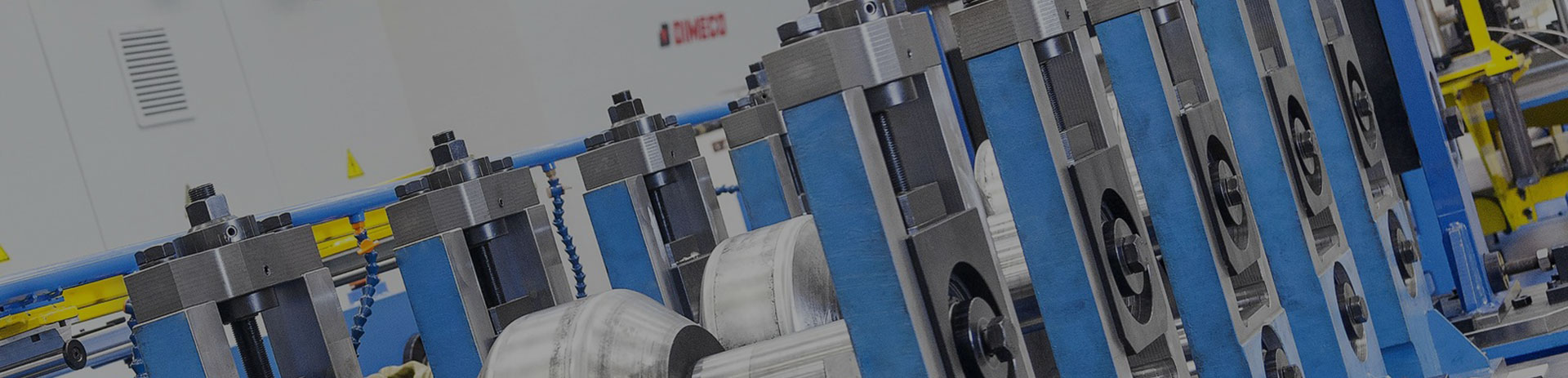
A steel downpipe roll former making machine progressively shapes flat metal strip into the required pipe profile. Each forming station contributes to the final geometry, so the tooling needs to control the material gradually and consistently.
Profile geometry has a direct effect on the forming process. A round downpipe requires progressive edge and body forming, while square or rectangular profiles involve controlled corners and side dimensions. Changes in the profile can therefore require changes to the roll tooling and forming sequence.
The material also needs to remain properly guided through the line. Poor alignment can cause dimensional variation or affect the appearance of the finished downpipe.
For this reason, buyers should provide a complete cross-sectional drawing rather than only stating the nominal pipe size. Details such as corner radius, seam arrangement, effective width, and dimensional tolerance can help the supplier determine the appropriate forming configuration.
When Does Automation Make a Difference in Downpipe Production?
Continuous production becomes more efficient when material feeding, forming, cutting, and related operations are properly coordinated. An automated line can reduce manual intervention between these stages and provide more consistent production conditions.
Useful automated functions may include:
Coil feeding: Maintains continuous material supply to the forming section.
Roll forming: Progressively creates the required downpipe geometry.
Length control: Determines the required finished section length.
Automatic cutting: Separates finished sections without relying on manual measurement.
Counting: Helps track production quantities during continuous operation.
The appropriate automation level depends on production volume and product variety. A manufacturer producing several downpipe specifications should also consider changeover procedures and tooling requirements rather than focusing only on automatic operation.
Why Are Forming Accuracy and Cutting Control Important?
A downpipe may need to connect with elbows, outlets, brackets, connectors, or other drainage components. Dimensional consistency can therefore affect how easily the finished sections fit into the wider drainage system.
Forming accuracy determines whether the cross-section remains within the required dimensions throughout production. Cutting accuracy then determines whether individual sections meet the specified length.
Stable operation requires coordination between the forming section and cutting system. If the cutting position changes from one cycle to another, operators may need additional inspection or adjustment before the products can be used.
JINGGONG Technology's downspout roll forming machine can be evaluated based on the intended downpipe profile, material range, forming requirements, and finished-length specifications. Providing these details helps establish whether the proposed configuration matches the production application.
How Should Buyers Compare Downpipe Roll Forming Machine Manufacturers?
Price is one part of an equipment quotation, but it does not describe the complete production capability. Buyers should compare the technical configuration, tooling, automation, and support associated with each proposal.
Key comparison points include:
Profile capability: Confirm that the supplier can configure tooling for the required downpipe shape.
Material range: Check supported material types, thicknesses, and coil widths.
Production capacity: Compare practical working speed under the specified material and profile conditions.
Tooling configuration: Ask how the forming stations are designed and what profile changes are possible.
Cutting system: Confirm finished-length control and cutting accuracy.
Changeover requirements: Check how long it takes to change between different product specifications.
Installation and commissioning: Clarify what support is provided during equipment setup and initial production.
Documentation and service: Confirm the availability of operating information, technical assistance, and replacement components.
These questions help distinguish between quotations that may appear similar but are based on different assumptions.
Conclusion: Comparing Downpipe Equipment by Production Requirements
Selecting among downpipe roll forming machine manufacturers starts with the finished product rather than the machine price. Profile geometry, material thickness, coil width, forming sequence, cutting requirements, and production volume all influence the appropriate configuration. Manufacturers should provide detailed product drawings and material specifications when requesting quotations so suppliers can develop technically comparable proposals. JINGGONG Technology can be considered within this process by evaluating its downpipe forming equipment against the required profile and production conditions. A complete technical comparison provides a clearer basis for equipment planning and line integration.
FAQ
What does a downpipe roll forming machine produce?
It continuously forms metal coil into specified downpipe profiles and can cut the formed material into required lengths.
Which materials can a downpipe forming machine process?
The supported material depends on the machine configuration. Buyers should confirm material type, thickness, coil width, and other relevant specifications with the supplier.
Does downpipe shape affect the machine configuration?
Yes. Round, square, rectangular, and other profiles can require different roll tooling and forming sequences.
Why is the cross-sectional drawing important?
The drawing provides the dimensions and geometric details needed to design or select suitable forming rolls and guides.
What should be compared between machine manufacturers?
Buyers can compare profile capability, material range, practical production speed, tooling, cutting, automation, changeover, installation support, and technical service.
Can one machine produce different downpipe sizes?
A machine may be configured for a defined range of sizes, but tooling and changeover requirements depend on the specific profiles and materials involved.

 CN
 EN
 fr
 de
 es
 it
 ru
 pt
 ar
 th
 pl
 ro


 Call us on:
 Email Us:
 #1809, Jianhu Rd, Keqiao, Shaoxing, Zhejiang, China